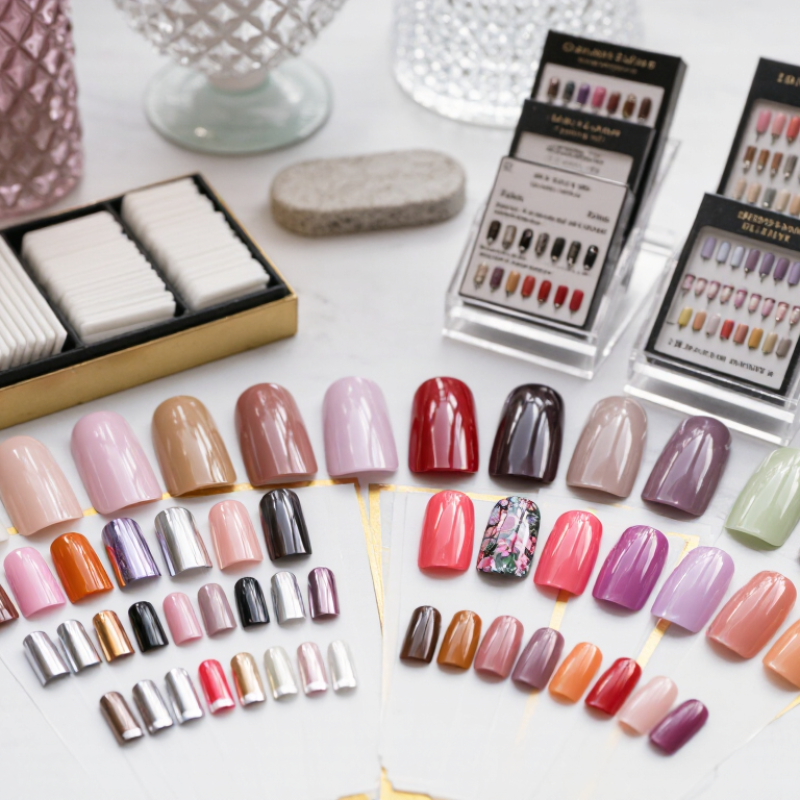
| Short Round | 8–12 mm beyond the natural nail edge | Compact length with a curved free edge; low snag risk. | Daily office wear, school, healthcare environments, and first-time users. | Rigid ABS or acrylic-style plastic with a smooth, even surface; glossy and matte finishes are common. | Usually the easiest shape to fit. Check width at the widest point of each natural nail rather than relying only on a standard size label. | 5–10 days | Good resistance to normal typing and light household activity; less leverage than long styles. | Generally comfortable when the sidewalls do not press into the skin. Avoid forcing a smaller tip onto a wider nail. | Look for a consistent curve, thin but strong edges, clean cuticle lines, and no visible bubbles or warping. |
| Short Square | 8–13 mm beyond the natural nail edge | Straight sidewalls and a squared free edge; structured appearance. | Professional settings, practical everyday wear, and users preferring a neat geometric look. | Firm construction is important because square corners can receive more impact; surface decoration should be sealed evenly. | Best for nails with moderate-to-wide nail beds. Sidewalls should align without extending over the skin. | 5–10 days | Good overall strength, although corners may chip if the tip is too long or catches on hard surfaces. | Round or softly filed corners can improve comfort and reduce snagging. Remove carefully instead of lifting forcefully. | Inspect corners, sidewall symmetry, adhesive compatibility, and whether the underside is smooth enough for full contact. |
| Medium Oval | 13–18 mm beyond the natural nail edge | Balanced length with tapered sides and a rounded tip. | Versatile retail assortments, formal events, and buyers wanting an elegant but wearable silhouette. | Requires a balanced combination of flexibility and rigidity; an even apex helps distribute impact. | Often suits narrow-to-medium nail beds. Measure all ten nails because left and right hands are not always identical. | 5–10 days | Moderate-to-good durability when the tip is properly sized and bonded across the full nail plate. | More comfortable than sharply pointed shapes, but length can still interfere with manual work or contact sports. | Check that the curve follows the natural nail without large air gaps and that the tip does not rock after placement. |
| Medium Almond | 14–20 mm beyond the natural nail edge | Tapered sides with a softly pointed, rounded tip; visually lengthening. | Fashion collections, occasion wear, and customers seeking a refined silhouette. | A smooth transition from the apex to the tip is essential. Thin pointed ends should not be brittle or uneven. | Usually fits narrow-to-medium nail beds. The widest section must match the natural nail without side pressure. | 5–8 days | Good flexibility and appearance, but the tapered tip is more vulnerable to bending than short round styles. | Use a moderate length for active users. Do not use a damaged or split tip, as sharp edges may scratch the skin. | Check tip alignment, consistent tapering, smooth edges, and resistance to light flexing without cracking. |
| Long Coffin | 20–30 mm beyond the natural nail edge | Long tapered sides ending in a straight free edge; high-impact fashion profile. | Special occasions, editorial designs, salon-style collections, and customers comfortable with extended length. | Needs a strong central structure and a well-sealed design layer. Excessively thin long tips are more likely to bend or snap. | Requires accurate sizing and careful placement. A tip that is too narrow can create side pressure and premature lifting. | 3–7 days | Higher leverage makes this style more susceptible to impact damage, lifting, and breakage during manual tasks. | Not ideal for intensive work, young children, or users with weak or peeling natural nails. Keep away from excessive force. | Evaluate the apex, sidewall thickness, straightness of the free edge, and the strength of the decorative coating. |
| Long Stiletto | 22–35 mm beyond the natural nail edge | Strongly tapered sides with a sharp point; dramatic visual effect. | Costume use, photo shoots, performance styling, and limited-duration event wear. | Needs a reinforced structure and a smooth, securely sealed point. The sharp tip must be free from cracks and rough plastic. | Fit is demanding because the narrow tip and high curve can cause pressure if the base is not matched correctly. | 2–5 days | Lowest practical durability among common shapes because the point concentrates impact and creates high leverage. | Use with caution around children, pets, fabrics, and manual activities. Avoid wearing when the point is cracked or deformed. | Check point symmetry, base curvature, edge smoothness, structural reinforcement, and secure packaging protection. |
| Short Squoval | 9–14 mm beyond the natural nail edge | Square profile with softened corners; combines structure with reduced snagging. | Mass-market collections, travel, everyday wear, and customers wanting a low-maintenance shape. | Consistent thickness and a smooth transition around the softened corners improve both appearance and service life. | Suitable for many medium-width nail beds. A complete ten-size range improves fit across international customer groups. | 5–10 days | Good balance of strength, comfort, and resistance to corner damage. | Soft corners are generally more comfortable, but correct sizing and gentle removal are still necessary to protect the natural nail. | Confirm uniform sizes, accurate labeling, smooth edges, stable color, and full adhesive contact after application. |