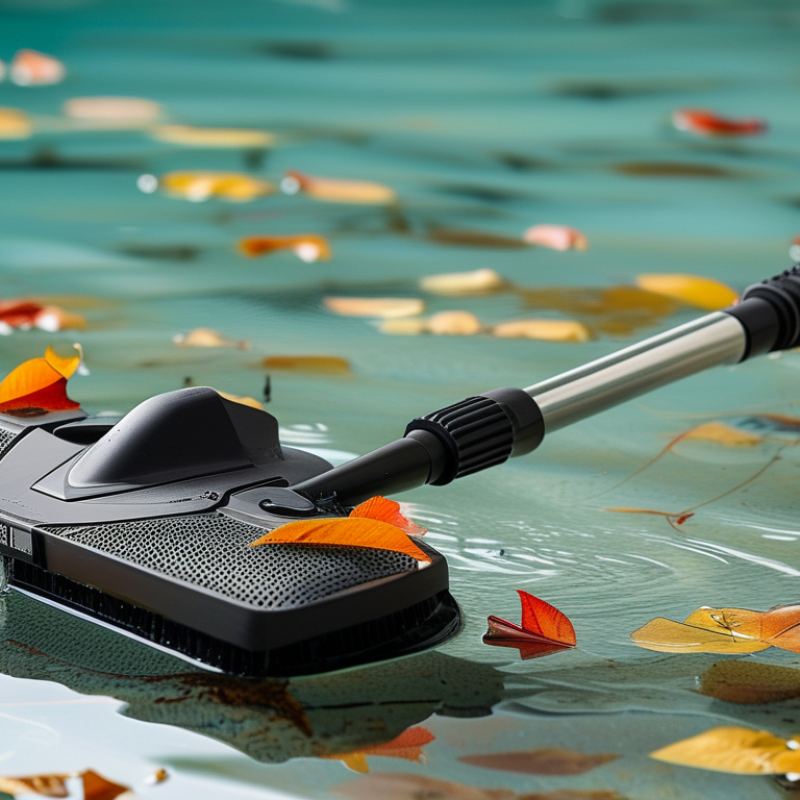
| 1. Check Frame Durability | Inspect the frame material, joint construction, rim stiffness, and resistance to bending or cracking. | Look for corrosion-resistant plastic, reinforced polymer, or anodized aluminum components with securely molded or fastened joints. | A rigid frame keeps the net opening stable when collecting wet leaves, insects, and other debris. | For humid, coastal, or high-chlorine environments, prioritize materials that resist corrosion and ultraviolet exposure. |
| 2. Evaluate Net Quality | Compare mesh depth, stitching or edge attachment, mesh fineness, and resistance to tearing. | A fine mesh captures small debris, while a deeper bag improves collection capacity; the attachment should not leave exposed sharp edges. | Net design affects cleaning speed, debris retention, and the likelihood of snagging on pool surfaces. | Fine mesh is useful for pollen and small insects, but it may require more frequent emptying when used for large quantities of leaves. |
| 3. Confirm Pole Compatibility | Verify the handle connection type, internal diameter, locking method, and pole length requirements. | Common connections include push-button and threaded fittings; the skimmer should lock firmly without excessive wobble. | A compatible connection prevents detachment and improves control when reaching the center or deep end of a pool. | Connection standards can vary by market and supplier, so request exact fitting dimensions before placing a bulk order. |
| 4. Match the Pool Type | Consider above-ground or in-ground use, pool size, wall shape, surface finish, and access around steps or corners. | A lightweight net suits routine surface cleaning; a reinforced frame is preferable for large pools or heavier debris loads. | The right design reduces scraping, improves reach, and limits stress on the pool wall and the user’s arms. | For multiple pool types, select a universal-fitting model only after testing it with the intended pole systems and pool surfaces. |
| 5. Assess Ergonomics and Load | Review total weight, handle angle, grip comfort, balance, and the net’s resistance when lifted from water. | The tool should remain balanced when the net is partially filled and should not require excessive force to maneuver. | Good balance reduces wrist and shoulder strain during repeated cleaning operations. | For commercial or frequent-use applications, compare packed weight and handling comfort through sample testing before shipment. |
| 6. Plan Storage Requirements | Measure the assembled length, folded or detachable dimensions, hanging options, and drying requirements. | A detachable head or collapsible pole can reduce storage volume; the net should be rinsed and fully dried before storage. | Proper storage helps prevent mildew, odor, deformation, and premature deterioration of the net and frame. | For warehouses and retail displays, compare carton dimensions, stacking efficiency, and moisture-resistant packaging. |
| 7. Verify Maintenance and Service Life | Check rinsing instructions, replaceable parts, cleaning access, UV resistance, and warranty or inspection procedures. | The net should be easy to rinse with fresh water, and replacement heads or nets should be available when practical. | Simple maintenance extends service life and lowers the long-term cost of ownership. | Confirm spare-part availability, packaging language, import documentation, and quality-inspection requirements for the destination market. |