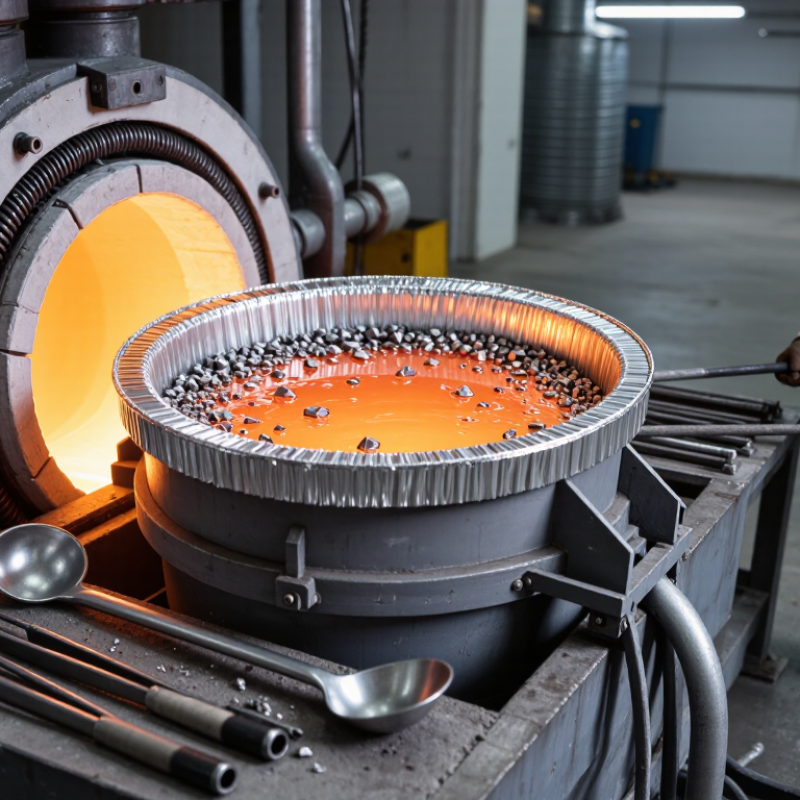
| Basic Definition | Aluminium melting pot | A heat-resistant vessel used to contain and melt aluminium or aluminium alloys. | Heat is transferred from an electric heating element, gas burner, induction coil, or external furnace into the metal charge. | Inspect the vessel, lining, heating system, and temperature controls before every operating cycle. |
| Material Property | Pure aluminium melting point | Approximately 660.3°C (1,220.5°F). | The operating temperature must be above the melting point to create a fully liquid bath. | Avoid excessive overheating because it increases oxidation, dross formation, energy use, and crucible wear. |
| Operating Temperature | Typical molten aluminium temperature | Commonly about 680–800°C (1,256–1,472°F), depending on alloy, process, and pouring requirements. | Lower temperatures reduce oxidation; higher temperatures may improve fluidity but can increase metal loss and equipment damage. | Verify temperature with a calibrated thermocouple or immersion pyrometer rather than relying only on the controller display. |
| Common Type | Electric resistance melting pot | Uses resistance heating elements surrounding or beneath the crucible; often available in small and medium capacities. | Suitable for workshops, laboratories, maintenance departments, and small-batch casting because temperature control is relatively precise. | Keep heating elements dry and free from metal splash; check insulation, wiring, terminals, and temperature sensors regularly. |
| Common Type | Gas-fired melting pot | Uses propane or natural gas burners with a refractory-lined chamber; commonly selected for portable or higher-throughput melting. | Combustion gases heat the crucible and surrounding refractory lining. It can provide rapid heating and flexible fuel operation. | Inspect burners, gas hoses, regulators, combustion air openings, refractory lining, and exhaust paths for damage or blockage. |
| Common Type | Induction melting pot or furnace | Uses an alternating electromagnetic field to induce electric currents in the metal charge; usually applied to controlled production melting. | Provides rapid, uniform heating and can reduce direct flame contamination. The system requires suitable electrical power and cooling. | Check the induction coil, cooling-water flow, electrical interlocks, insulation, and refractory condition according to the equipment schedule. |
| Crucible Material | Graphite or clay-graphite crucible | Offers good thermal-shock resistance and is widely used for non-ferrous metal melting. | Common in small foundries and casting operations where removable crucibles are heated externally. | Preheat gradually, keep dry, avoid sudden temperature changes, and replace the crucible when cracks, severe erosion, or wall thinning appear. |
| Crucible Material | Silicon-carbide crucible | Provides high thermal conductivity, good thermal-shock resistance, and strong resistance to many foundry conditions. | Used for repeated melting cycles and applications requiring efficient heat transfer and durable service. | Prevent mechanical impact, avoid prolonged empty overheating, and inspect for oxidation, cracks, distortion, and excessive wear. |
| Crucible Material | Cast-iron or steel pot | Strong and comparatively economical, but iron contamination and oxidation must be considered. | May be used for selected aluminium applications when material compatibility and contamination limits are acceptable. | Maintain a clean protective coating where appropriate; remove rust and inspect for thinning, scaling, cracks, and metal penetration. |
| Capacity | Small laboratory or hobby pot | Often designed for a few kilograms of aluminium, depending on crucible geometry and heater rating. | Used for demonstrations, prototyping, repair work, and small castings. | Do not exceed the rated charge weight. Confirm that tongs, lifting tools, and the support stand are suitable for the total load. |
| Capacity | Workshop or production pot | Capacity ranges from several kilograms to hundreds of kilograms, depending on furnace design and handling equipment. | Used for batch casting, machine-shop recycling, component production, and process development. | Record cycle counts, monitor lining wear, inspect lifting points, and service burners, elements, controls, or coils on a planned schedule. |
| Melting Process | Charging the pot | Clean, dry aluminium charge is placed into the pot without exceeding the manufacturer’s recommended fill level. | Dry charge materials reduce the risk of violent reactions caused by moisture contacting molten metal. | Store scrap under dry conditions and remove sealed, wet, or contaminated items before charging. |
| Melting Process | Heat transfer and liquefaction | Heat raises the charge to its melting range, after which solid aluminium becomes a liquid metal bath. | Convection within the liquid metal helps equalize temperature, while the furnace system maintains the required holding temperature. | Prevent cold spots by using proper loading practices and avoid unnecessary stirring that can entrain oxides and gas. |
| Metal Treatment | Dross removal | Dross is a mixture of aluminium oxide and entrained metal formed mainly at the molten surface. | A skimming tool removes dross before transfer or pouring, improving metal cleanliness and reducing inclusions. | Skim gently with clean, dry tools; do not use wet tools or return heavily oxidized dross to the melt without an appropriate recovery process. |
| Metal Transfer | Pouring or ladling | Molten aluminium is transferred using a suitable preheated ladle, tilt mechanism, or controlled furnace outlet. | The transfer method should minimize turbulence, splashing, and air entrainment during casting. | Inspect ladles, handles, pouring lips, refractory coatings, and lifting devices before use; keep all contact tools completely dry. |
| Safety Feature | Temperature control and over-temperature protection | Industrial systems commonly use thermocouples, controllers, alarms, and independent high-limit protection. | These components maintain the target temperature and help prevent overheating of the metal, crucible, or furnace structure. | Calibrate sensors periodically and test alarms, emergency shutoffs, and control-panel functions according to the maintenance plan. |
| Safety Requirement | Moisture prevention | Water can rapidly vaporize when it contacts molten aluminium and may cause a dangerous metal splash or explosion-like eruption. | Dry charge materials, tools, crucibles, molds, and work areas are essential for safe operation. | Keep the furnace area dry, store materials off the floor, and preheat moisture-sensitive tools and molds using approved procedures. |
| Routine Maintenance | Daily or pre-use inspection | Check the crucible or lining, frame, controls, cables, fuel system, ventilation, and emergency equipment. | Early detection of damage reduces the risk of leakage, fire, electrical faults, and unplanned downtime. | Document inspection results and remove damaged equipment from service until it has been evaluated and repaired. |
| Routine Maintenance | Cleaning and dross management | Remove accumulated dross, spilled metal, dust, and refractory debris from accessible areas after the equipment has cooled safely. | Clean surfaces improve heat transfer, reduce contamination, and make cracks or leaks easier to identify. | Use tools and cleaning methods approved for the furnace material; never add water to hot metal or hot refractory. |
| Replacement Indicator | Crucible or lining deterioration | Warning signs include cracks, bulging, severe erosion, metal penetration, distortion, flaking, or unusual wall thinning. | Continued operation with a damaged vessel can lead to molten-metal leakage and structural failure. | Replace the crucible or repair the lining before the damage reaches a critical condition; follow the supplier’s service-life guidance. |
| Energy and Process Control | Heat-up and holding efficiency | Efficient insulation, correct burner adjustment, closed furnace covers, and appropriate holding temperatures reduce energy consumption. | The pot should melt the required charge efficiently without maintaining an unnecessarily high temperature for extended periods. | Inspect insulation and covers, remove excessive buildup, and review heating time, temperature, and fuel or electricity records. |