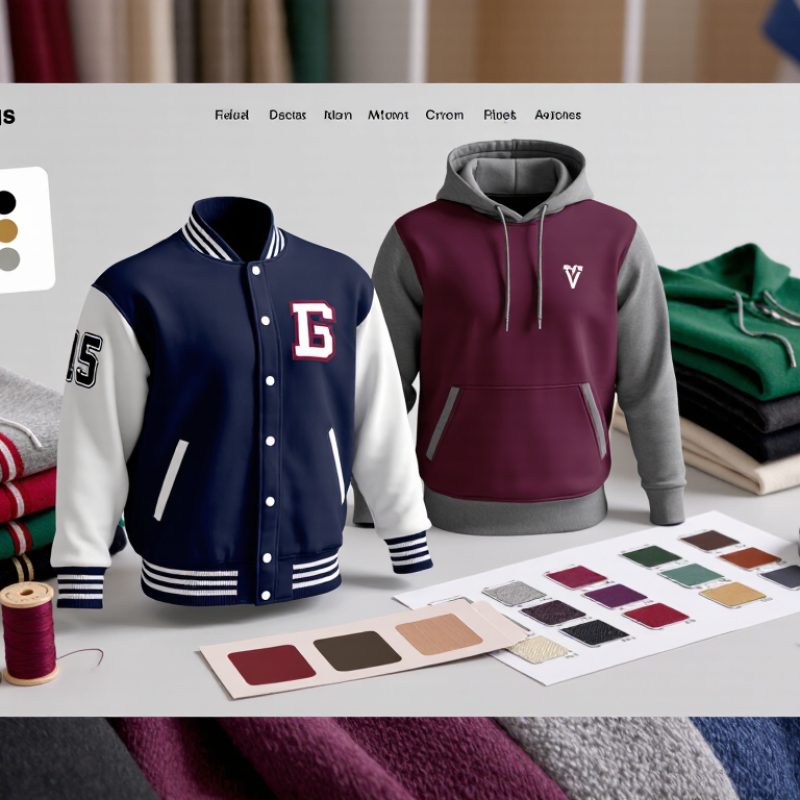
| Basic Definition | A hooded casual top influenced by baseball uniforms, often featuring contrast sleeves, athletic panels, or team-style graphics. | A casual hooded sweatshirt with a continuous body design and no baseball-specific construction details. | A hooded sweatshirt that opens fully at the front with a zipper. | Confirm whether the supplier can produce baseball-inspired details without using protected team names, logos, or artwork. |
| Typical Silhouette | Usually relaxed or regular fit, with a sporty shape suitable for layering and casual wear. | Commonly relaxed, regular, or oversized depending on the target market. | Often slightly easier to layer because the front opening allows adjustment. | Request a measurement chart for chest width, body length, sleeve length, and hood dimensions. |
| Common Design Details | Raglan or contrast sleeves, rib-knit cuffs, a kangaroo pocket, drawcord hood, appliqué, embroidery, or screen printing. | Kangaroo pocket, rib-knit cuffs and hem, drawcord hood, and printed or embroidered decoration. | Front zipper, split pockets, rib-knit cuffs and hem, and a drawcord or structured hood. | Ask for a detailed tech pack review covering panels, seam placement, trims, artwork, and construction tolerances. |
| Common Fabric Options | Cotton jersey, cotton-polyester fleece, French terry, or polyester fleece, depending on warmth and performance needs. | Cotton fleece, cotton-polyester fleece, French terry, or blended jersey. | Cotton blends, fleece, French terry, or lightweight synthetic blends. | Specify fiber composition, fabric weight, shrinkage tolerance, colorfastness, pilling performance, and hand feel. |
| Warmth and Seasonality | Ranges from lightweight transitional wear to warm fleece suitable for cool weather. | Typically designed for cool-weather casual wear, with warmth determined mainly by fabric weight and brushing. | Can be lightweight or warm; the open front provides flexible ventilation and layering. | Use fabric weight, such as grams per square metre, as a comparison point, but verify the actual sample because finishing affects feel. |
| Customization Potential | High; contrast panels, sleeve colors, lettering, numbers, patches, embroidery, and placement graphics can be customized. | High; customization commonly focuses on fabric color, prints, embroidery, labels, and fit. | High, but zipper color, tape, puller, pocket construction, and front artwork require additional specifications. | Provide vector artwork, color references, logo usage rights, decoration method, and exact placement measurements. |
| Typical Decoration Methods | Screen printing, embroidery, appliqué, heat transfer, or chenille-style patches. | Screen printing, embroidery, heat transfer, or woven labels. | Embroidery, screen printing, heat transfer, or woven labels, with care around zipper seams. | Evaluate decoration durability after washing and confirm whether the chosen method suits the fabric surface. |
| Key Quality Checks | Panel alignment, sleeve symmetry, seam strength, rib recovery, hood shape, artwork placement, and color matching. | Fabric consistency, seam quality, rib recovery, print or embroidery accuracy, and measurement consistency. | All standard checks plus zipper operation, zipper alignment, tape strength, and smooth opening and closing. | Approve a pre-production sample and use a written inspection checklist before bulk production. |
| Sizing Requirements | Requires a clear size range and consistent grading across the body, sleeves, cuffs, and hood. | Requires standard body measurements and fit approval for the intended market. | Requires body measurements plus zipper length and front-opening specifications. | Define acceptable measurement tolerances and test shrinkage before confirming the size set. |
| Packaging and Labeling | May include size labels, fiber-content labels, care labels, hangtags, folded packing, and individual polybags where required. | Uses similar apparel labeling and packaging requirements. | May need additional protection for zippers and hardware during packing and transport. | Confirm destination-market labeling rules, carton details, packing ratios, and packaging material requirements. |
| Best Sourcing Workflow | Define the design brief, shortlist capable suppliers, review fabric and decoration samples, approve a prototype, confirm specifications, and inspect production. | Select the fabric and fit, approve artwork and samples, confirm specifications, then proceed with production and inspection. | Add zipper and hardware testing to the standard sample and inspection process. | Compare suppliers by sample quality, communication, minimum order quantity, lead time, compliance documentation, and quality-control process rather than price alone. |