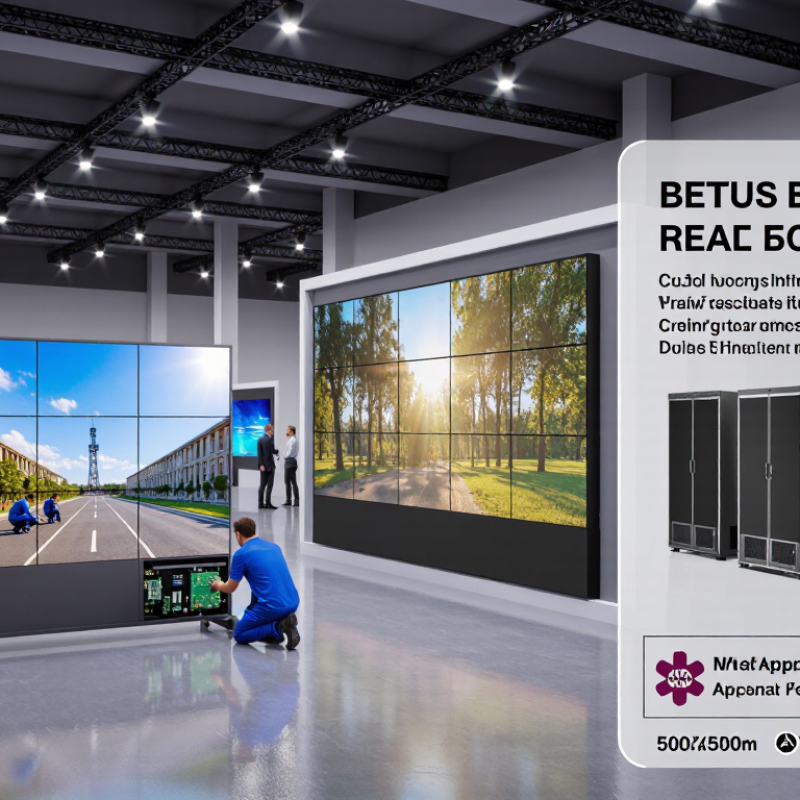
| Indoor fine-pitch panel | Pixel pitch: 1.25–2.5 mm
Brightness: approximately 600–1,500 nits
Refresh rate: 1,920–3,840 Hz | Suitable for meeting rooms, control rooms, broadcast studios, retail spaces, and close viewing distances. | Native-resolution test images, color-uniformity results, grayscale test, and a sample panel for visual inspection. |
| Standard indoor panel | Pixel pitch: 2.6–4.0 mm
Brightness: approximately 800–1,500 nits
Typical average power: about 180–300 W/m² | Provides a practical balance between image quality, viewing distance, cabinet cost, and energy use. | Complete technical datasheet, power test conditions, cabinet weight, installation drawings, and warranty terms. |
| Outdoor fixed-installation panel | Pixel pitch: 3.9–10 mm
Brightness: approximately 4,500–7,000 nits
Front protection: typically IP65 or higher when properly assembled | Designed for sunlight, longer viewing distances, changing weather, and continuous operation. | Ingress-protection test documentation, thermal test results, outdoor burn-in records, and cabinet sealing details. |
| Rental or touring panel | Cabinet size commonly around 500 × 500 mm or 500 × 1,000 mm
Lightweight die-cast cabinet
Fast-lock assembly and front or rear service access | Reduces setup time and supports repeated installation, dismantling, transportation, and maintenance. | Mechanical drawings, lock-cycle test results, corner-protection details, spare-part list, and packing specifications. |
| LED module consistency | Uniformity target: typically at least 97% for brightness and color in a properly calibrated screen
Consistent binning across the project | Reduces visible color blocks, brightness differences, and replacement-module mismatch. | Calibration report, module-binning policy, batch traceability, and photographs or video of a full-screen white and gray test. |
| Refresh rate and camera performance | Recommended: at least 1,920 Hz for general video
3,840 Hz or higher for broadcast, livestreaming, and professional camera work | Higher refresh rates can reduce scan lines, flicker, and rolling-band artifacts in recorded video. | Camera test at multiple shutter speeds, refresh-rate setting, scan-mode information, and receiving-card specifications. |
| Thermal management | Operating temperature commonly around −20°C to +50°C, depending on model
Temperature monitoring and controlled airflow recommended | Stable temperature control helps protect LEDs, power supplies, driver ICs, and image consistency. | High-temperature test report, thermal design drawings, fan specifications, and operating-temperature limits. |
| Electrical safety and power design | Input: commonly 100–240 V AC
Power factor: preferably at least 0.95
Separate power and signal paths recommended | Improves electrical efficiency, installation safety, and maintenance reliability. | Power-supply certificates, electrical schematics, grounding instructions, power-factor data, and protection functions. |
| Quality-control process | Recommended checkpoints: incoming inspection, module aging, cabinet assembly, full-screen test, packing inspection, and final burn-in | A documented process is more reliable than a product specification alone. | Quality-control flowchart, inspection records, defect-acceptance criteria, and sample production reports. |
| Certifications and compliance | Relevant documentation may include CE, RoHS, EMC, LVD, FCC, or other requirements applicable to the destination market | Ensures that the screen is suitable for the electrical, environmental, and regulatory requirements of the installation location. | Current certificates showing the exact model, certificate holder, testing laboratory, validity, and applicable standards. |
| Warranty and spare parts | A written warranty of at least 2 years is commonly requested
Recommended spare modules: approximately 2–5% of the installed quantity | Shortens downtime and simplifies repairs during the operating life of the display. | Warranty exclusions, response-time commitment, spare-parts pricing, repair procedure, and long-term component availability. |
| After-sales and technical support | Support should cover configuration, remote diagnostics, installation guidance, replacement procedures, and software updates | Responsive support can have a greater effect on total ownership cost than the initial panel price. | Service-level agreement, escalation contacts, training materials, remote-support process, and references for comparable installations. |