| Camera and Image Quality | Video resolution, frame rate, field of view, image stabilization, exposure control, and low-light performance | 15% | Review original sample files rather than compressed website images; test daylight, indoor, and moving scenes | Require the manufacturer to state resolution and frame rate under actual operating conditions |
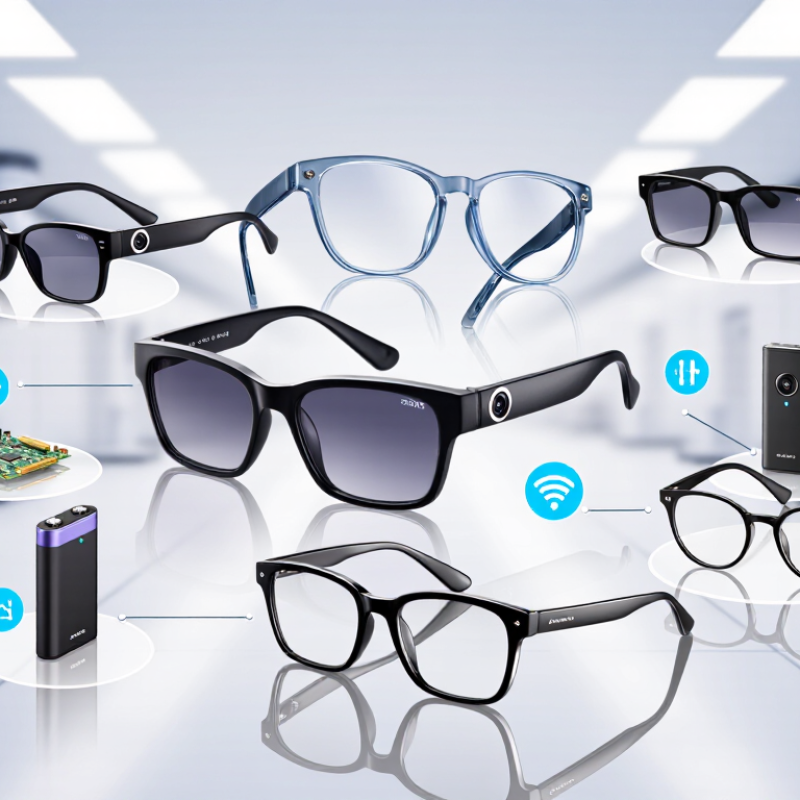
| Optical Design | Lens alignment, distortion, viewing angle, prescription-lens compatibility, and visual obstruction | 10% | Inspect engineering samples and conduct a wearer trial with different face shapes and lens prescriptions | The camera position should not significantly obstruct normal vision or interfere with prescription lenses |
| Battery and Charging | Battery capacity, continuous recording time, charging time, standby time, and charging-cycle performance | 12% | Measure recording duration at the declared resolution with wireless functions enabled and disabled | Battery claims should specify test conditions, firmware version, ambient temperature, and recording mode |
| Electronics and Connectivity | Bluetooth or Wi-Fi functions, transfer stability, connection distance, storage capacity, and supported mobile operating systems | 10% | Test pairing, file transfer, reconnect behavior, application compatibility, and operation without cloud access | Require a written compatibility list and a defined procedure for firmware updates |
| Audio and User Controls | Microphone clarity, wind-noise handling, speaker output where applicable, physical controls, and recording-status indication | 8% | Conduct voice and ambient-noise tests; verify that recording status is clear to the wearer and bystanders | Controls should be usable without removing the glasses and should minimize accidental activation |
| Manufacturing and Quality Control | Incoming inspection, in-process testing, final inspection, traceability, defect handling, and production capacity | 15% | Request quality-control procedures, sample inspection records, corrective-action reports, and a factory audit | Prefer suppliers able to provide batch traceability for lenses, batteries, cameras, and circuit boards |
| Safety and Regulatory Documentation | Electrical safety, battery safety, electromagnetic compatibility, material restrictions, and transport documentation | 12% | Check applicable test reports and declarations, including IEC 62368-1, IEC 62133-2, UN 38.3, IEC 60529, RoHS, or destination-market requirements | Documents must match the exact model, battery, charger, and intended sales market |
| Privacy and Data Security | Recording indicator, local-storage control, user permissions, data deletion, account security, and privacy-policy coverage | 8% | Review application permissions, network behavior, account controls, deletion functions, and default privacy settings | The product should provide a visible recording signal and clear instructions for lawful use in each target market |
| Customization Capability | Lens and frame options, logo or packaging customization, firmware configuration, language support, and accessory options | 5% | Request a written customization list, prototype schedule, tooling fees, and minimum order quantities | Separate standard options from changes requiring new tooling or software development |
| Commercial and After-Sales Support | Sample lead time, production lead time, warranty period, spare-parts policy, repair process, and response time | 5% | Review the quotation, warranty terms, service-level agreement, replacement policy, and historical delivery records | Compare total landed cost, not only the unit price, including tooling, testing, freight, taxes, and support |