| Cloud Gaming System | Players who want access to demanding games without purchasing a high-performance computer. | Compatible television, computer, tablet, or streaming device; supported controller; optional headset. | Usually requires a stable connection of approximately 15–35 Mbps. Ethernet or a strong 5 GHz Wi-Fi connection is recommended. | Can support high-definition output, but image quality depends heavily on bandwidth, server distance, and network congestion. | Bluetooth or USB controller; keyboard and mouse support varies by service. | Approximately US$50–US$200 for a compatible controller or streaming device. | Commonly US$10–US$25 per month, excluding game purchases where applicable. | No large downloads, low hardware barrier, quick access to a broad game library, and easy device switching. | Input delay, compression artifacts, service availability, and dependence on a reliable internet connection. | Best for convenience |
| Standalone Virtual Reality Headset | Players seeking room-scale immersion, motion-controlled games, and a simple setup without a separate computer. | Self-contained VR headset, two motion controllers, charging cable, and a suitable play area. | Internet is mainly needed for downloads, updates, multiplayer, and account services; offline play is possible for supported titles. | Typically offers stereoscopic displays with refresh rates commonly ranging from 72 Hz to 120 Hz, depending on the model and application. | Six-degree-of-freedom motion controllers, hand tracking on supported software, and optional gamepads. | Approximately US$300–US$700, depending on storage, display quality, and tracking features. | Usually optional; games are purchased individually, with some subscription-based libraries available. | Portable, easy to install, immersive movement tracking, and no gaming computer required. | Limited battery life, reduced graphical performance compared with high-end computers, and possible motion discomfort. | Best for accessible immersion |
| PC-Tethered Virtual Reality System | Enthusiasts who prioritize advanced graphics, simulation accuracy, mod support, and a large PC game library. | VR headset, capable gaming computer, motion controllers, tracking system or cameras, and a clear play space. | Broadband internet is recommended for downloads, online play, and updates; a wired connection can improve multiplayer stability. | Often provides the highest visual detail, advanced lighting, wider software support, and refresh rates commonly between 90 Hz and 144 Hz. | Motion controllers, tracked accessories, keyboard and mouse, steering wheel, flight controls, and specialized peripherals. | Approximately US$900–US$2,500 or more for the headset and a suitable computer. | Generally no required platform fee; game purchases, upgrades, and accessories create additional costs. | Superior graphics, extensive customization, simulation support, and access to demanding VR applications. | Higher cost, more complicated setup, cable management, and greater space and hardware requirements. | Best for performance |
| Console-Style Living-Room System | Families and players who prefer local multiplayer, simple menus, physical controls, and television-based gaming. | Dedicated game console, television or monitor, wireless controllers, and optional camera or headset. | Internet is recommended for updates, digital purchases, cloud saves, and online multiplayer; many single-player games work offline. | Commonly supports high-definition or ultra-high-definition output, with performance modes often targeting 30 or 60 frames per second. | Wireless gamepads, accessibility controllers, racing wheels, motion accessories, and headsets. | Approximately US$300–US$700, excluding games and additional controllers. | Online multiplayer may require a monthly or annual membership; games are purchased separately or through optional libraries. | Simple setup, consistent performance, strong local multiplayer support, and broad television compatibility. | Less hardware flexibility than a computer and possible membership fees for online multiplayer. | Best for shared play |
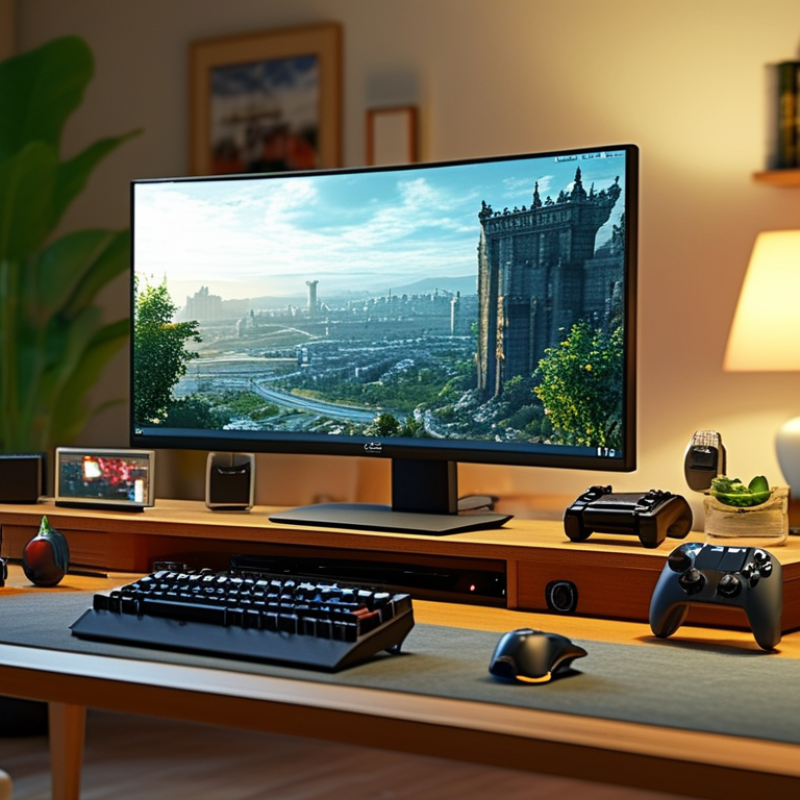
| Gaming Computer with Monitor | Players who want flexibility across competitive games, strategy titles, creative software, and virtual reality. | Desktop or laptop gaming computer, monitor, keyboard, mouse, and optional controller or VR headset. | Internet is useful for multiplayer, patches, digital stores, streaming, and cloud synchronization; offline gaming is widely supported. | Can support high refresh rates from 120 Hz to 360 Hz and resolutions from full HD to ultra-high definition, depending on hardware. | Keyboard and mouse, gamepad, flight controls, racing wheel, accessibility devices, and VR equipment. | Approximately US$700–US$3,000 or more, depending on processor, graphics hardware, memory, and display. | No mandatory platform fee for most online games, although individual games, software, and upgrades may require payment. | Broadest software selection, upgradeability, strong competitive performance, and support for many input devices. | Higher technical complexity, greater maintenance needs, and potentially higher total cost. | Best for versatility |
| Portable Gaming System | Travelers and players who value portability, short sessions, and access to games away from a television. | Handheld device, built-in display and controls, charger, and optional memory card or docking accessory. | Wi-Fi is needed for downloads, updates, cloud features, and online multiplayer; many installed games can be played offline. | Usually provides a compact display with resolutions commonly between 720p and 1600p, depending on screen size and power settings. | Integrated buttons and joysticks, detachable controllers on some designs, touchscreen, and optional external gamepad. | Approximately US$200–US$800, depending on processing power, display, storage, and controller design. | Optional game purchases, online services, storage expansion, and accessories. | Portable, quick to start, suitable for commuting, and capable of both casual and demanding games on selected models. | Smaller screen, limited battery life under heavy workloads, and reduced performance compared with desktop systems. | Best for mobility |
| Remote-Play Companion Device | Players who already own a primary gaming system and want to continue playing from another room. | Remote-play handheld or mobile device, compatible primary gaming system, controller interface, and home network. | A reliable home network is essential. A connection of approximately 15 Mbps or higher is commonly recommended for a stable experience. | Visual quality is streamed from the primary system and is affected by screen resolution, network quality, and encoding delay. | Integrated controls or a compatible wireless controller; touch controls may be available for selected games. | Approximately US$150–US$400, excluding the primary gaming system. | Usually no separate fee, although the main platform, games, or online services may involve existing costs. | Extends access to an existing game library and reduces competition for the main television. | Requires the primary system to be available and depends strongly on local network performance. | Best for secondary access |