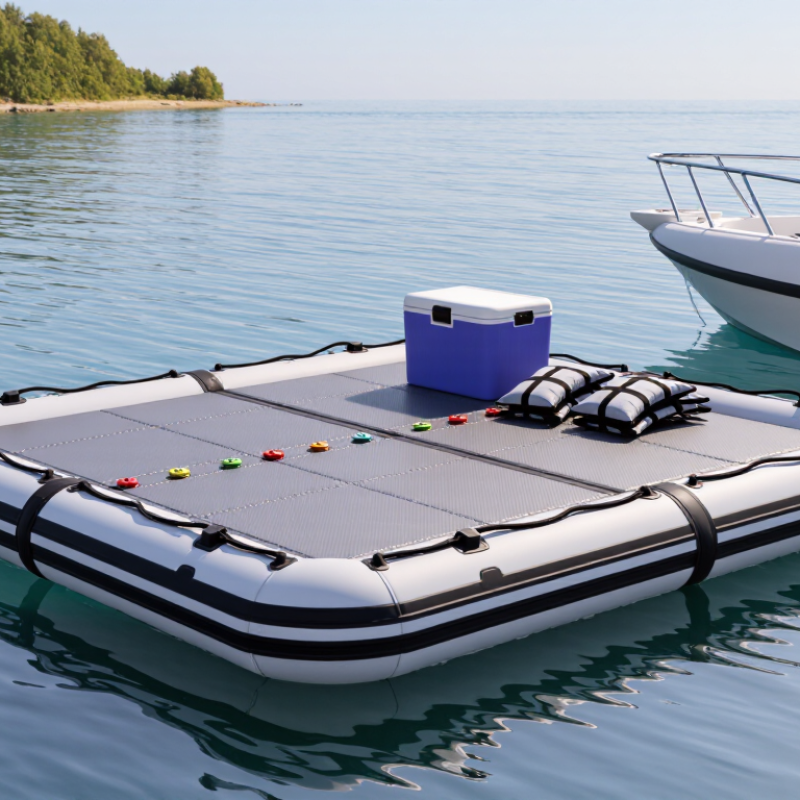
| Drop-Stitch Inflatable Deck | High-density polyester or PVC drop-stitch core with a firm, flat surface. Common lengths are approximately 2.0–4.0 m and widths are about 0.8–1.5 m. | High-pressure hand pump, electric pump, or rechargeable pump. Many models operate around 8–12 psi; always follow the manufacturer’s pressure rating. | Non-slip deck pad, D-rings, grab handles, carry bag, repair kit, pressure gauge, removable seat, and tie-down straps. | Rinse with fresh water after saltwater use, dry completely, inspect seams and valves, and check pressure before each outing. Avoid dragging over sharp surfaces. | Deflate fully, clean and dry before folding, and store in a cool, dry place away from direct sunlight, fuels, oils, and rodents. Avoid tight creases during long-term storage. | General boating, boarding, fishing, swimming access, and users who want a stable, portable platform with good rigidity. | Usually heavier and slower to inflate than low-pressure air chambers. Excessive heat can increase internal pressure and stress seams. |
| Low-Pressure Air-Deck Platform | Flexible inflatable floor made from reinforced PVC or similar coated fabric. Common sizes range from about 1.8–3.5 m in length and 0.7–1.3 m in width. | High-volume, low-pressure foot, hand, or electric pump. Typical operating pressure is approximately 2–5 psi, depending on construction. | Foot pump, pressure gauge, removable seat, carry handles, splash guard, repair patches, and storage bag. | Check for slow leaks, clean sand from valves and seams, dry the underside, and keep the fabric away from sharp fins, hooks, and rough docks. | Packs smaller than high-pressure platforms. Store loosely rolled or lightly folded, fully dry, and protected from prolonged heat and ultraviolet exposure. | Recreational use, short trips, calm-water transport, and buyers prioritizing low weight and quick packing. | Less rigid and less supportive under concentrated loads. It may flex more when used as a standing deck or when carrying heavy equipment. |
| Inflatable Boat Floor Insert | Removable floor designed to fit inside an inflatable hull. Available as air floors or multi-panel inflatable inserts; dimensions depend on hull size. | Separate inflation chamber or valve system from the boat tubes. Air-floor pressures commonly range from about 3–10 psi. | Floor bag, pressure gauge, pump adapter, aluminum or composite floor stiffener, seat bench, and repair materials compatible with the hull fabric. | Remove grit and water before installation, inspect the floor-to-hull fit, and keep valves free from sand. Check that the insert does not rub against seams. | Store separately from the boat when possible. Keep panels or the deflated insert dry, clean, and protected from sharp hardware and excessive folding. | Inflatable dinghies and tenders that need improved walking comfort and load distribution without carrying a rigid floor. | Compatibility is critical. A poorly fitted insert can reduce usable space or create abrasion points inside the hull. |
| Inflatable Swim or Boarding Platform | Wide, low-profile platform with reinforced drop-stitch construction, handles, and multiple attachment points. Common lengths are approximately 2.0–4.0 m. | High-pressure electric or manual pump. Typical operating pressure is around 8–15 psi, subject to the product’s rated limit. | Boarding ladder, grab lines, stainless or reinforced D-rings, anchor points, non-slip pad, repair kit, and tether straps. | Rinse after use, inspect attachment points and handles, remove sunscreen and fuel residue, and confirm that the tether system is secure before deployment. | Dry completely before rolling. Store away from sharp ladders, hooks, metal fittings, and temperatures that can soften or deform the material. | Swimming, water access, paddle-sport support, and boarding assistance from larger boats or fixed docks. | Not normally intended for high-speed towing or heavy concentrated loads unless specifically rated for those activities. |
| Inflatable Fishing or Utility Platform | Reinforced drop-stitch or multi-chamber construction with a non-slip work surface. Typical lengths are about 2.0–3.5 m and widths are about 0.9–1.4 m. | High-pressure pump with a gauge and separate valves for multiple chambers. Working pressure commonly falls within 8–12 psi for drop-stitch sections. | Rod holders, gear-mounting points, seat, cooler tie-downs, anchor fittings, paddle holders, carry handles, and a repair kit. | Inspect all D-rings and mounting points, remove hooks and fish scales promptly, rinse with fresh water, and avoid contact with solvents or sharp tackle. | Remove accessories before packing, dry all compartments, and store without heavy objects pressing on the folded platform or valves. | Anglers and utility users who need organized gear storage, stable standing space, and attachment points for equipment. | More accessories increase weight and setup time. Fishing hardware can puncture or abrade the surface if not secured properly. |
| Modular Inflatable Dock System | Multiple connectable inflatable sections, often using drop-stitch construction. Individual modules commonly measure about 1.0–3.0 m, allowing different layouts. | High-volume electric pump followed by a high-pressure pump where required. Many rigid-style modules operate approximately between 8 and 15 psi. | Connecting straps, joining plates, cleats, grab lines, ladders, anchor points, fenders, storage mounts, and safety handrails. | Check every connector, seam, valve, and attachment point. Rinse salt and mud away, inspect for chafing, and replace worn straps or damaged fittings promptly. | Requires more storage volume than a single platform. Label modules, dry them individually, and store them on shelves or in protective bags without sharp bends or heavy stacking. | Marinas, waterfront access, temporary event use, swim areas, and users needing a configurable platform layout. | Higher purchase, transport, and maintenance demands. Stability depends on correct connection, anchoring, and water conditions. |