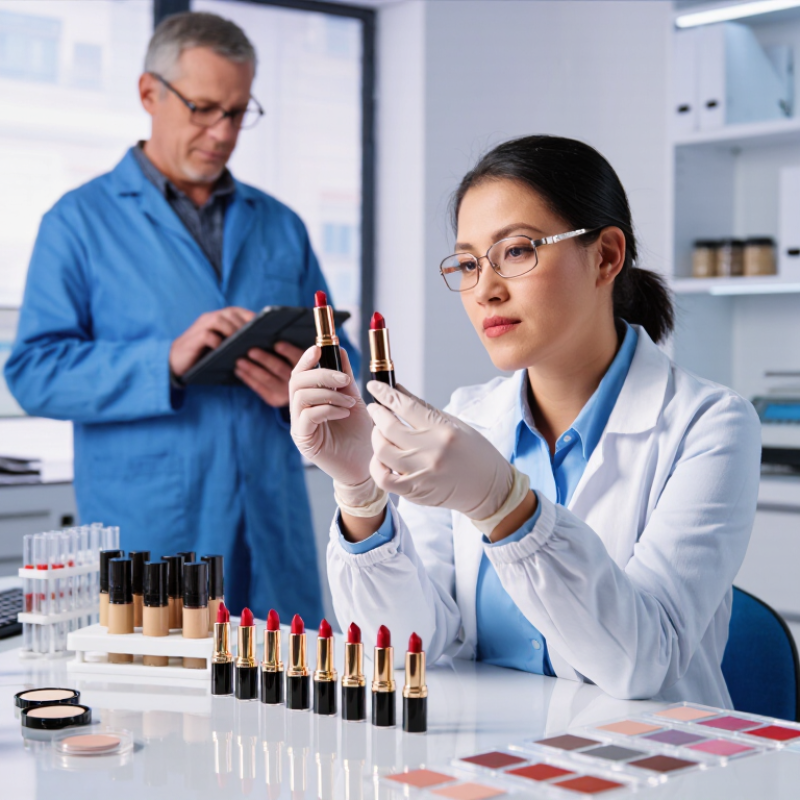
| Makeup Product Expertise | Relevant experience with the specific product format, such as pressed powder, mascara, lipstick, liquid foundation, or cream blush. | Different formats require different formulation, filling, packaging, and quality-control capabilities. | Ask for anonymized examples of comparable products, available formulation options, minimum order quantities, and typical development timelines. |
| Formulation and Ingredient Controls | Documented ingredient specifications, supplier qualification, batch records, and a process for reviewing restricted or prohibited ingredients in target markets. | Ingredient requirements vary by product and jurisdiction; controlled documentation supports traceability and consistent production. | Review a sample specification and ask how ingredient changes are assessed, approved, and communicated before production. |
| Quality Management and GMP | Written procedures for manufacturing, sanitation, personnel training, equipment maintenance, batch release, deviations, and corrective actions. | Good manufacturing practices help reduce contamination risks and production inconsistencies. | Request a current audit summary or relevant certification scope. ISO 22716 addresses cosmetics GMP; verify the certifying body, site, scope, and validity. Certification alone does not guarantee product compliance. |
| Facility and Process Controls | Suitable production areas, cleaning controls, calibrated equipment, controlled storage, and segregation practices where needed. | Facility controls help protect product quality and prevent mix-ups or contamination. | Ask whether the proposed manufacturing site is the site named in quality documents and whether a remote or on-site audit is available. |
| Product Safety and Testing | Risk-based testing appropriate to the formula and use, which may include stability, packaging compatibility, microbiological quality, and preservative efficacy testing for applicable water-containing products. | Testing helps evaluate whether a product remains suitable under expected storage and use conditions. | Request test protocols, acceptance criteria, reports for the proposed formula and packaging, and an explanation of any test exclusions. Testing needs depend on product type and risk. |
| United States Regulatory Readiness | Ability to support applicable requirements under the Federal Food, Drug, and Cosmetic Act and the Modernization of Cosmetics Regulation Act (MoCRA), including facility registration and product listing where required. | MoCRA introduced additional obligations for responsible persons and certain manufacturing facilities. FDA cosmetic facility registration and product listing are not FDA approval or endorsement. | Clarify who will handle each applicable filing and keep evidence of submitted information. Confirm whether an exemption applies rather than assuming all businesses have identical obligations. |
| European Union Regulatory Readiness | Support for Regulation (EC) No 1223/2009, including an EU-based Responsible Person, a Cosmetic Product Safety Report (CPSR), a Product Information File (PIF), and CPNP notification before the product is placed on the EU market. | These are key requirements for cosmetics marketed in the EU; the Responsible Person must ensure the product meets applicable obligations. | Identify the proposed Responsible Person and confirm who prepares, holds, and updates the safety documentation. A manufacturer’s general compliance claim is not a substitute for product-specific records. |
| Labeling and Claims Support | Ability to provide accurate product information for applicable ingredient declarations, warnings, batch identification, responsible-party details, and market-specific labeling. | Labeling rules differ by market, and product claims must be appropriate and substantiated. Claims that imply treatment or prevention of disease may change a product’s regulatory status in some jurisdictions. | Request a label review workflow and evidence supporting proposed claims. Have final artwork reviewed for each intended market before printing. |
| Traceability and Recall Readiness | Records linking raw-material lots to finished-product batches, along with complaint handling, investigation, and recall procedures. | Traceability supports investigations and timely action if a quality or safety issue arises. | Ask how quickly the manufacturer can identify affected batches and request a description of its mock-recall or traceability exercise process. |
| Certification and Document Verification | Current, relevant certificates and audit documents, with a clearly stated scope, manufacturing site, issuing organization, and validity period. | Certificates may cover only particular sites or activities and do not replace legal responsibilities or product-specific assessments. | Verify documents with the issuing organization where possible; check that the certificate applies to the actual product category and production location. |
| Supplier Communication and Change Control | Written procedures for approving formula, raw-material supplier, manufacturing-site, packaging, and process changes. | Unreviewed changes can affect product performance, safety assessments, test results, or labeling accuracy. | Agree on advance written notice, approval responsibilities, retained samples, and updated testing or regulatory reviews when changes occur. |