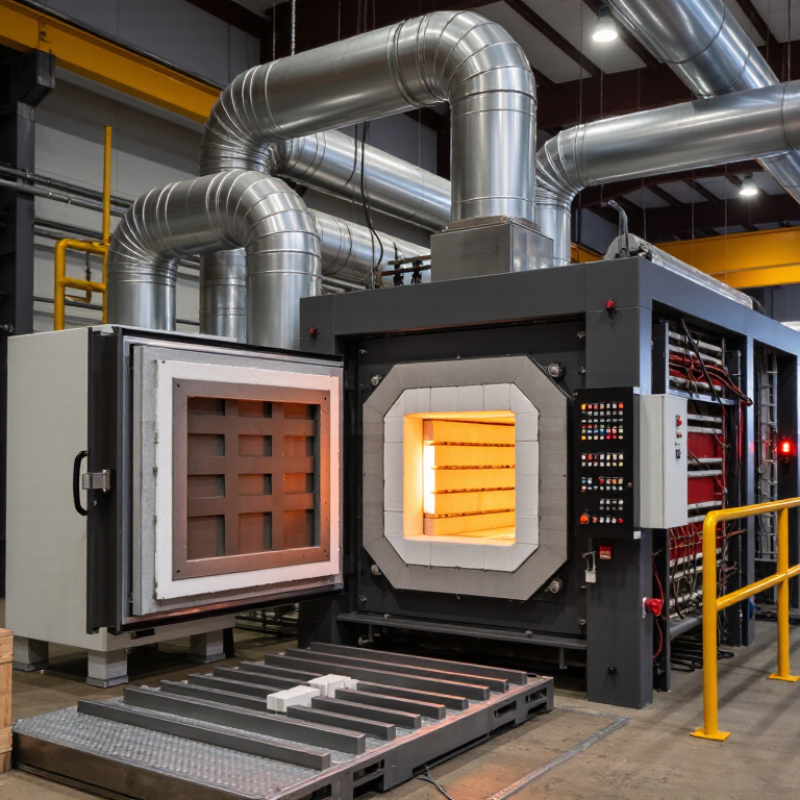
China Top Aluminum Furnace Manufacturers How to Choose?

Choosing among China’s top aluminum furnace manufacturers requires more than comparing catalog prices. A furnace may look similar in photographs, yet differ in lining quality, temperature control, fuel efficiency, and maintenance access. The right choice begins with your actual process. Consider alloy type, melting capacity, batch frequency, target temperature, and available energy source. Small details matter. Ask whether the supplier has built comparable systems for foundries, die-casting plants, or recycling operations. Request drawings, performance data, inspection records, and customer references. A reliable manufacturer should explain technical assumptions clearly. Impressive claims are not enough.

An aluminum furnace should match your production risks, not simply your planned budget. Review burner design, furnace structure, control software, fume handling, safety devices, and refractory materials. Check how the manufacturer tests temperature uniformity and energy consumption before shipment. Factory audits can reveal welding quality, assembly discipline, spare-parts storage, and technician capability. These details often predict long-term service performance. Confirm installation support, operator training, warranty limits, and response times for breakdowns. Export projects also require careful review of applicable electrical, environmental, and workplace safety requirements in the destination country. Do not treat certificates as automatic proof of quality. Verify their scope and authenticity with appropriate authorities or independent inspectors. No supplier is flawless. A perfect ranking is impossible. Even experienced buyers can overlook maintenance access or future alloy changes. Therefore, compare evidence, not slogans, and document every technical promise in the purchase contract. This approach helps identify a manufacturer that offers dependable melting performance, transparent communication, and practical support throughout the furnace’s working life.

China Top Aluminum Furnace Manufacturers How to Choose?

What Defines a Top Aluminum Furnace Manufacturer in China?

China Top Aluminum Furnace Manufacturers: How to Choose?

What defines a top aluminum furnace manufacturer in China? It is not the largest catalog. It is proven control over temperature, metal quality, safety, and service. The International Aluminium Institute reported global primary aluminum production above 70 million tonnes in 2023. That scale makes energy performance commercially important. Ask for measured fuel consumption, temperature uniformity, melt-loss records, and references from similar alloys. A reliable supplier explains test conditions. Vague “high efficiency” claims are not evidence.

Look for engineering depth. A strong manufacturer sizes burners, refractory, exhaust, charging systems, and controls as one process. It should provide calibration records, material certificates, factory acceptance tests, and a clear spare-parts plan. ISO 9001 certification helps, but it does not prove furnace performance. Request a witnessed trial using your charge mix. Check heat-up time, dross generation, recovery rate, and emissions data. The International Energy Agency repeatedly identifies industrial efficiency as a major route to lower energy demand. Still, one factory test may not mirror winter operation, operator habits, or contaminated scrap. That limitation deserves honest discussion.

Tips: Compare three technically equivalent quotations. Require itemized energy assumptions. Ask who answers alarms at 2 a.m. Inspect welds, refractory joints, cable protection, and maintenance access. Review two years of service records, not only photographs. Include acceptance penalties for missed uniformity or capacity targets. Keep room for doubt. The cheapest furnace can become expensive through downtime, oxidation, and delayed parts.

Which Types of Aluminum Furnaces Do Chinese Manufacturers Produce?

Chinese aluminum furnace manufacturers produce several furnace types for different casting and heat-treatment demands. Gas-fired and electric reverberatory furnaces are common for large-volume melting. They use a shallow chamber, where metal melts under controlled heat. Crucible furnaces suit smaller batches, laboratory work, and flexible alloy changes. Rotary furnaces are useful for processing aluminum scrap and dross, although material preparation strongly affects recovery.

Holding furnaces maintain molten aluminum near casting temperature. They usually include temperature control, stirring, filtration, and degassing options. Heat-treatment furnaces support solution treatment, aging, annealing, and stress relief. These systems often use forced-air circulation to improve temperature uniformity. Induction furnaces offer fast heating and precise control, but their suitability depends on alloy chemistry, batch size, and electricity costs.

The International Aluminium Institute reported about 70.6 million tonnes of global primary aluminum production in 2023. China produced roughly 41 million tonnes, showing the scale of its furnace manufacturing and casting market. The Institute also reports that recycled aluminum requires far less energy than primary production, making scrap-melting equipment increasingly important. Still, capacity alone proves little. A practical buyer should inspect temperature records, lining design, exhaust treatment, energy data, and after-sales testing. Some specifications look impressive on paper. They may perform differently beside a dusty scrap yard, frequent door openings, or unstable power.

How to Evaluate Furnace Quality, Technology, and Energy Efficiency?

China’s top aluminum furnace manufacturers should be judged by measured performance, not polished brochures. Check temperature uniformity across the chamber, burner stability, refractory thickness, and door sealing. A reliable furnace should maintain the required temperature with limited fluctuation. Ask for factory acceptance-test records and independent calibration certificates.

Energy efficiency deserves equal attention. The International Aluminium Institute reports that recycled aluminum requires only about 5% of the energy used for primary aluminum production. This makes melting losses and heat recovery important. Examine fuel consumption per tonne, exhaust temperature, oxygen control, and flue-gas heat recovery. Also request data from real operating sites, not only laboratory trials. A small error here becomes expensive over thousands of cycles. The assumption that a larger furnace is automatically more efficient is often wrong.

Tips: Compare three years of operating data. Measure kWh or fuel per tonne, melt loss, heating time, and unplanned downtime. Check whether the control system records furnace temperature continuously. Inspect refractory joints around doors and burner ports; these areas often reveal poor workmanship. Ask how quickly technicians can replace sensors and repair insulation. ISO 13579 guidance can support industrial furnace energy evaluation, while the U.S. Department of Energy identifies process heating as a major share of industrial energy use. Still, published figures may not match your alloy, batch size, or local fuel. A controlled trial is wiser than trusting a perfect quotation.

China Top Aluminum Furnace Manufacturers How to Choose? - How to Evaluate Furnace Quality, Technology, and Energy Efficiency?
Evaluation Area Key Data or Specification Recommended Reference or Benchmark How to Verify the Claim Suggested Weight
Furnace Type Available configurations may include gas-fired, electric resistance, induction, reverberatory, crucible, or rotary furnaces. Select the furnace according to melt volume, alloy type, fuel availability, metal-loss tolerance, and required melt cleanliness. Review the process-flow diagram, furnace layout, loading method, and a reference installation with a similar alloy and production capacity. 8%
Rated Melting Capacity Compare both hourly melting rate and usable holding capacity; do not rely only on the furnace nameplate capacity. The quoted melting rate should be supported by a documented test condition, including charge temperature, alloy, ambient temperature, and furnace loading pattern. Request a guaranteed performance test using the intended aluminum alloy and a clearly defined charge-to-tap cycle. 8%
Operating Temperature Aluminum melts at approximately 660.3°C. Industrial melting and holding temperatures are normally set above the liquidus temperature according to alloy and process requirements. The control system should provide stable temperature control without unnecessary overheating, which can increase oxidation, hydrogen pickup, and energy use. Check temperature uniformity at multiple points and compare the controller reading with a calibrated independent instrument. 9%
Specific Energy Consumption Measure energy used per tonne of aluminum melted, including fuel or electricity and clearly stated auxiliary equipment. A practical project target is commonly about 500–900 kWh per tonne for a well-operated melting system, but the actual value varies by furnace type, charge condition, alloy, and recovery rate. Require a site or factory acceptance test with calibrated gas meters, electricity meters, weighing equipment, and a defined production cycle. 15%
Thermal Efficiency Evaluate heat transfer to the charge, exhaust heat loss, wall loss, door loss, and standby consumption. The supplier should provide a heat-balance calculation and identify the conditions used for the stated efficiency. Compare suppliers using the same test boundary. Review combustion data, flue-gas temperature, insulation specification, burner turndown ratio, and measured energy consumption at partial load. 10%
Temperature Uniformity Check temperature differences between the bath surface, bottom, corners, and discharge area during stable operation. For a controlled aluminum process, a practical acceptance target is often within approximately ±5–10°C at defined measurement points. Use a calibrated thermocouple or data logger and perform a temperature-mapping test at empty, partial-load, and normal-load conditions. 8%
Metal Recovery and Dross Control Assess oxidation, dross generation, metal retained in dross, skimming method, and charging disturbance. Lower metal loss is generally associated with controlled temperature, reduced turbulence, shorter holding time, and appropriate flux or inert-gas practice where applicable. Compare charge weight, tapped metal weight, dross weight, and recovered metal over several repeatable production cycles. 10%
Combustion and Emissions For fuel-fired systems, review burner control, air-to-fuel ratio, flue-gas temperature, CO, NOx, and particulate control. The design should comply with applicable local emission limits and recognized industrial-furnace safety requirements, such as EN 746-2 or equivalent local standards. Request combustion commissioning records, emission-test reports, burner certificates, and details of interlocks for flame failure and excess temperature. 9%
Refractory and Insulation Quality Evaluate refractory type, working temperature, thermal conductivity, abrasion resistance, chemical compatibility, and repair method. The refractory system should be selected for molten aluminum service and protected against wet charging, thermal shock, corrosion, and mechanical damage. Review material datasheets, installation procedures, curing records, refractory thickness, and the expected service-life conditions. 8%
Control and Automation Check PLC control, recipe management, temperature recording, alarm history, remote diagnostics, and energy monitoring. A suitable system should record temperature and energy data by batch or production cycle and include password-controlled set-point access. Request a live demonstration of the HMI, alarm logic, data export, recipe permissions, backup procedure, and failure recovery sequence. 7%
Safety Systems Inspect emergency stop, over-temperature protection, flame-failure protection, fuel shutoff, door interlocks, molten-metal spill protection, and guarding. Safety functions should be risk-assessed, documented, tested, and aligned with applicable machinery, electrical, gas, and industrial-furnace regulations. Review the risk assessment, safety circuit drawings, interlock test records, operator instructions, and emergency-response procedures. 8%
Maintenance and Serviceability Consider access to burners, heating elements, thermocouples, filters, refractory areas, drain points, and electrical cabinets. Critical wear parts should have defined replacement intervals, clear maintenance procedures, and locally available alternatives where possible. Inspect the maintenance schedule, spare-parts list, response-time commitment, training plan, and troubleshooting documentation. 5%
Total Cost of Ownership Include purchase price, installation, utilities, refractory replacement, consumables, labor, downtime, emissions equipment, and disposal costs. Select the solution using a multi-year cost model rather than initial price alone. Energy and metal-loss costs should be calculated from measured or contractually guaranteed data. Request a five-year total-cost-of-ownership model with assumptions, sensitivity analysis, warranty terms, and exclusions clearly stated. 5%
Factory and Site Acceptance Define measurable acceptance criteria for capacity, energy use, temperature stability, safety functions, emissions, and automation. Use the same test method and production conditions for all shortlisted suppliers to make the technical comparison meaningful. Include acceptance thresholds, measurement instruments, test duration, responsibilities, corrective-action rules, and final documentation requirements in the purchase contract. 10%
Note: The numerical ranges are indicative engineering benchmarks, not universal guarantees. Final requirements should be confirmed through alloy-specific trials, local environmental regulations, calibrated measurements, and a written factory or site acceptance test.

What Certifications and Services Should Buyers Verify?

China Top Aluminum Furnace Manufacturers: How to Choose?

What Certifications and Services Should Buyers Verify?

When comparing aluminum furnace manufacturers in China, verify certificates against the actual furnace model. ISO 9001 can indicate controlled quality processes, but it does not guarantee melting performance. ISO 14001 may show stronger environmental management. CE marking, or another required conformity assessment, should match your destination market and equipment configuration. Ask for valid certificates, issuing bodies, scope, and expiration dates. Paperwork is not proof.

Request electrical safety reports, machinery risk assessments, and test records for burners, heating elements, insulation, and control cabinets. For systems involving pressure, verify the applicable inspection documents. Emission data should include fuel type, operating temperature, and test conditions. A reliable manufacturer should provide furnace drawings, material specifications, energy estimates, and a factory acceptance test procedure. Ask for traceability records. Small details matter.

Service quality often separates a workable furnace from an expensive problem. Confirm installation support, commissioning, operator training, spare-part availability, and remote troubleshooting. Check the warranty period and response time in writing. Request references from plants with similar capacity and alloy requirements. Video calls can reveal little; inspect a running furnace when possible. I would also ask how failures are recorded and corrected. Some suppliers offer impressive promises, yet their manuals remain incomplete. That gap deserves attention before payment.

How to Compare Prices, Customization, and Supplier Reliability?

Comparing China’s top aluminum furnace manufacturers requires more than reading the lowest quotation. The International Aluminium Institute reported global primary aluminum production above 70 million tonnes in 2023. This scale increases demand for stable melting, holding, and heat-treatment equipment.

Request an itemized price. Separate the furnace body, burner system, controls, installation, spare parts, and testing. A cheaper quotation may exclude insulation upgrades or emission-control equipment. That omission can become expensive later. The U.S. Department of Energy identifies process heating as a major industrial energy user. Therefore, compare fuel consumption per tonne, not only purchase price.

Customization should match your alloy, batch size, charging method, and factory layout. Ask for temperature uniformity records, heat-up time, lining materials, and available control languages. The International Organization for Standardization reported that ISO 9001 certifications remain widespread across manufacturing industries. Certification helps, but it does not prove furnace performance. Review factory test procedures, inspection photos, and references from similar aluminum operations.

Supplier reliability needs measurable evidence. Check response times, commissioning plans, technician availability, warranty exclusions, and critical spare-part lead times. Request at least three comparable production references. A polished website proves little. Some buyers overvalue automation and underestimate maintenance access. I would score lifetime energy cost and service capacity beside the initial price. No scorecard is perfect. Recheck assumptions after receiving the technical proposal.

Article Source:

Our offices

Axtel Poland (HQ)
Mokotów Box 16 Woloska St
02-675 Warsaw Poland

tel. (+48 22) 490 96 00
fax: (+48 22) 540 15 22
sale@officeveigl.com

Axtel Middle East & Asia
G-026, THUB 2
Dubai Silicon Oasis
Dubai United Arab Emirates

tel. +971 50 5540 902
sale@officeveigl.com

Axtel India Private Limited
Unit # S-2, Srinivasa Apartments,
16, 1st Cross, Doctors Layout, Kasturinagar,
Bengaluru, Karnataka, India

tel. +91 96865 46376
sale@officeveigl.com

Axtel Benelux
Microlab Kastanjelaan 400
5616 LZ Eindhoven The Netherlands

+31 629 796 453
sale@officeveigl.com