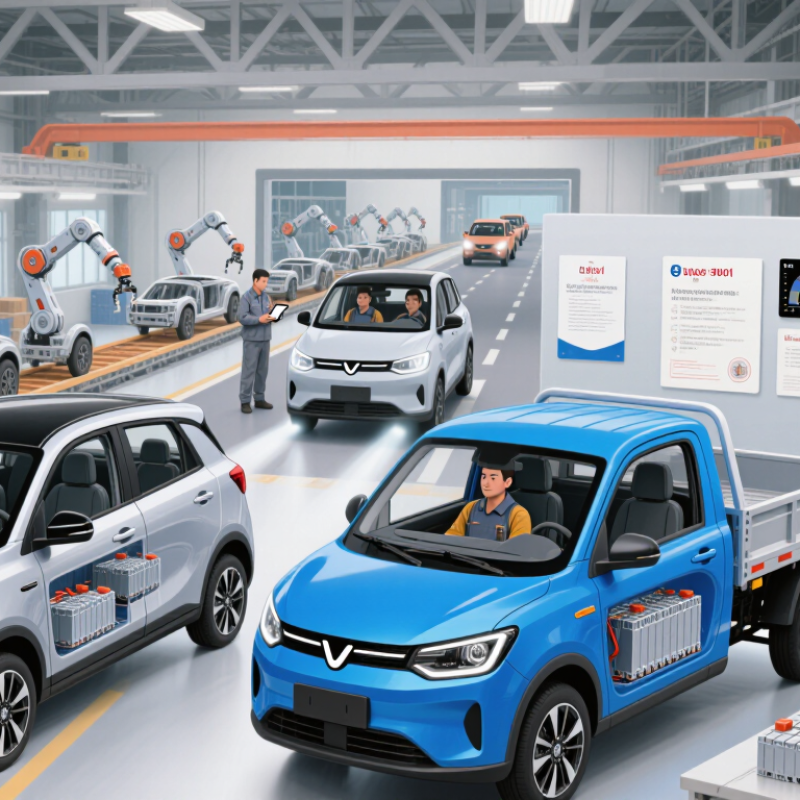
| Vehicle Category | L7e is the European Union category for heavy quadricycles. It generally covers four-wheel vehicles with a maximum continuous rated power of up to 15 kW. | The vehicle platform is developed around a four-wheel chassis, low-speed urban operation, compact dimensions, and the applicable L-category type-approval requirements. | Confirm the target approval category before finalizing the chassis, motor, battery, braking, lighting, and safety systems. |
| Maximum Continuous Power | Up to 15 kW for the L7e category under EU Regulation (EU) No. 168/2013. | Engineers select a motor, inverter, cooling system, and gear reduction that remain within the approved continuous-power limit while providing sufficient launch torque. | Motor dynamometer testing, controller parameter verification, thermal testing, and review of rated-power documentation. |
| Mass Limit | Maximum mass in running order is generally 450 kg for passenger quadricycles and 600 kg for goods-carrying quadricycles, excluding the mass of batteries for electric vehicles. | Weight targets are allocated to the frame, body, battery, suspension, glazing, interior, electrical system, and payload before prototype construction. | Weighing on a calibrated scale in the required running condition, followed by axle-load and payload verification. |
| Maximum Speed | L7e vehicles are designed for speeds above the L6e light-quadricycle limit of 45 km/h; the exact approved maximum speed depends on the vehicle configuration and market requirements. | The speed target is set through motor calibration, final-drive ratio, tire diameter, electronic speed control, and braking performance. | Controlled-road or test-track speed measurement, speedometer comparison, and software calibration audit. |
| Vehicle Layout | Common layouts include two-seat passenger vehicles and compact goods vehicles with a dedicated cargo area. | The battery and heavy components are positioned as low and centrally as practical to improve stability, usable cabin space, and axle-load balance. | Check seating, ingress and egress, cargo dimensions, turning clearance, center of gravity, and front/rear axle loads. |
| Chassis and Frame | A lightweight steel space frame, pressed-steel structure, or mixed metal structure is commonly used for small-series and mass production. | Computer-aided design and finite-element analysis are used to optimize torsional stiffness, mounting points, suspension loads, and manufacturability. | Dimensional inspection, weld quality inspection, coating-thickness measurement, and static load or torsional-rig testing. |
| Body Material and Manufacturing | Typical body options include painted steel panels, aluminum panels, or molded thermoplastic composite panels. | Production may use stamping, bending, injection molding, compression molding, robotic welding, adhesive bonding, and final paint or surface finishing. | Panel-gap inspection, surface-finish inspection, paint adhesion testing, corrosion protection review, and water-leak testing. |
| Electric Powertrain | Most new L7e designs use a battery-electric powertrain with a traction motor, inverter, reduction gear, onboard charger, and low-voltage electrical system. | The powertrain is matched to vehicle mass, gradeability, acceleration, regenerative-braking behavior, thermal limits, and intended daily mileage. | Insulation-resistance testing, high-voltage interlock verification, cooling-system testing, software diagnostics, and road-load validation. |
| Battery System | Battery capacity is selected according to vehicle mass, speed, grade, climate, charging access, and target range; no single capacity applies to every L7e model. | A battery-management system monitors cell voltage, temperature, current, state of charge, balancing, overcharge, over-discharge, and short-circuit protection. | Cell matching, pack voltage inspection, BMS communication testing, thermal monitoring, charging validation, and end-of-line insulation checks. |
| Suspension and Steering | Independent front suspension or a compact axle-based arrangement may be used, depending on payload, cost, handling targets, and packaging. | Spring rates, dampers, steering ratio, tire size, and alignment are selected for low-speed maneuverability and stable urban handling. | Wheel-alignment measurement, steering free-play check, suspension travel inspection, and durability testing over representative road surfaces. |
| Braking System | A hydraulic or mechanically actuated service brake system may be combined with regenerative braking on electric versions. | Brake sizing considers vehicle mass, tire grip, speed, grade, heat dissipation, parking-brake requirements, and electrical failure conditions. | Brake-force balance, stopping-distance, parking-brake, fade, wet-braking, and hydraulic-leak tests. |
| Lighting and Electrical Equipment | Road-legal lighting, direction indicators, reflectors, warning devices, mirrors or camera systems, and instrument displays are selected for the destination market. | A protected wiring harness is routed away from heat, sharp edges, moving parts, and water ingress points, with connectors specified for automotive use. | Functional testing, connector retention checks, fuse and relay verification, electromagnetic compatibility assessment, and water-ingress inspection. |
| Prototype Development | A production-ready program normally progresses through computer-aided design, engineering prototypes, verification prototypes, and pilot-production units. | Design changes are controlled through drawings, bills of materials, software revisions, engineering-change notices, and test reports. | Design-review sign-off, traceable test results, repeatability checks, and confirmation that the pilot vehicle matches approved specifications. |
| Assembly Process | Typical stages include frame preparation, suspension installation, wiring, battery and powertrain installation, body fitting, interior assembly, fluid filling, and software commissioning. | Standardized work instructions, torque specifications, dedicated fixtures, barcode traceability, and controlled assembly sequences reduce variation. | Torque-record verification, connector inspection, fastener marking, leak testing, diagnostic scanning, and visual inspection at each station. |
| End-of-Line Testing | Every completed vehicle should be checked for basic electrical, mechanical, functional, and safety-related performance before shipment. | The final inspection sequence combines diagnostic-tool testing with controlled checks of brakes, steering, lights, charging, drive operation, noise, and water sealing. | Vehicle identification, fault-code scan, brake test, wheel alignment, charging test, lighting test, road test, and release approval. |
| Compliance and Market Approval | Requirements vary by destination. European L7e approval is based on the applicable EU vehicle type-approval framework, while other markets may use different national rules. | The manufacturer prepares technical documentation, component certificates, test evidence, conformity records, and production-conformity procedures for the target market. | Independent technical-service testing, document review, approval-body assessment, and continuing production-conformity audits. |
| Supplier and Manufacturer Evaluation | A capable manufacturer should demonstrate traceable materials, stable production processes, battery safety controls, documented testing, and after-sales support. | Supplier qualification, incoming inspection, process capability monitoring, corrective-action procedures, spare-parts planning, and warranty analysis are integrated into production management. | Review quality manuals, inspection records, sample test reports, production traceability, change-control procedures, and service response capability. |