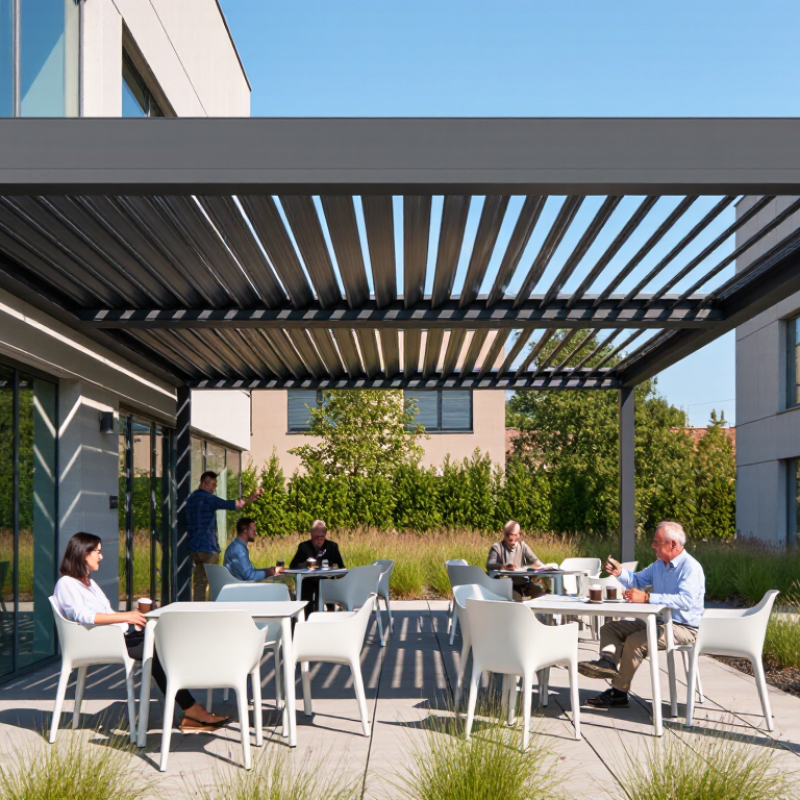
| Frame and Louver Materials | Aluminum is commonly used for louvered pergola frames and blades because it is relatively lightweight and corrosion-resistant. Some designs may use other metals or combine materials. | Ask for material specifications, alloy or grade details, wall thicknesses, and the finish specification. Confirm suitability for the project’s coastal, humid, or other environmental conditions. |
| Louver Operation | Adjustable louvers are commonly operated by an electric motor; some products use manual controls. Motorized systems allow users to change the angle of the blades to manage sunlight and airflow. | Confirm the control method, power requirements, operating range, manual override availability, and compatibility with any intended building-control system. |
| Rain Management | Many designs direct rainwater through channels in or around the louvers into integrated gutters and downspouts when the roof is closed. | Request installation details, drainage capacity information, and written clarification of weather-performance limits. A louvered roof should not be assumed to be fully waterproof in every condition. |
| Wind and Structural Performance | Structural performance depends on the frame, louver design, dimensions, fixings, installation, and local exposure conditions. Ratings and test methods can differ between products and markets. | Obtain project-relevant engineering information or test documentation. Check applicable local building requirements and confirm the required anchoring and foundation design with a qualified professional. |
| Configuration and Custom Sizing | Manufacturers may offer freestanding or wall-attached configurations, multiple bay layouts, and project-specific dimensions. Available options differ by product system. | Confirm maximum spans, post locations, clearances, allowable configurations, and whether the quoted dimensions are standard or custom. Request dimensioned drawings before production. |
| Surface Finish and Color | Powder-coated finishes are commonly offered for aluminum components, often in a selection of standard colors; custom colors may be available by request. | Ask for the coating specification, color samples, care instructions, and any relevant finish-performance documentation. Verify whether custom finishes affect cost or lead time. |
| Lighting and Accessories | Optional features may include integrated lighting, heaters, screens, sensors, or remote controls, depending on the system. | Check accessory compatibility, electrical requirements, control integration, and whether accessories are included in the quotation or supplied separately. |
| Manufacturing and Documentation | Suppliers may provide product drawings, installation instructions, parts lists, and packaging information. Documentation and support levels vary. | Request current technical documents, installation guidance, spare-parts information, export packaging details, and a clear process for handling defects or missing components. |
| Warranty and After-Sales Support | Warranty coverage and service arrangements vary by supplier, component, destination, and intended use. | Review warranty duration, exclusions, claim procedures, replacement-part availability, and who is responsible for local installation and service. |
| International Orders and Compliance | Export arrangements can involve shipment planning, customs documentation, and market-specific product or electrical requirements. | Confirm the delivery terms, shipment responsibilities, required certificates or declarations for the destination market, and who handles import duties and customs clearance. |