10 Tips for Choosing a Metal 3D Printer?

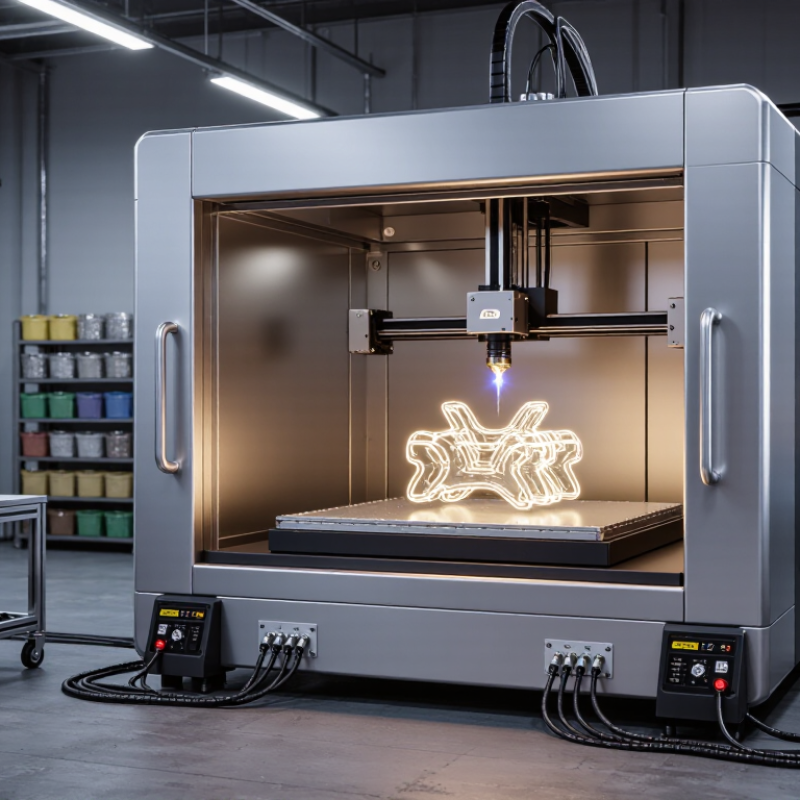
Choosing a Metal 3d Printer is a serious engineering decision, not a simple equipment purchase. The right system must match your materials, part geometry, production volume, and quality requirements. A compact printer may suit aerospace prototypes, while a larger platform may better support industrial batches. Bigger is not always better.

Terry Wohlers, a respected additive manufacturing consultant, once stated, “The future of manufacturing is digital.” His view remains relevant, but digital manufacturing still depends on physical details. Laser stability, powder handling, chamber temperature, build volume, and software control can directly affect the final part. Watch the melt pool. Inspect the surface.

This guide presents ten practical tips for evaluating a Metal 3d Printer. It considers process selection, compatible alloys, machine accuracy, post-processing needs, maintenance, operator training, and supplier support. Total ownership cost also matters. Electricity, inert gas, powder recycling, spare parts, and certification can change the budget considerably. A low purchase price may hide expensive operating demands.

Experience shows that printed parts can look excellent while failing internal inspection. That possibility deserves attention. Buyers should request test builds, material data, repeatability results, and references from comparable users. No checklist can replace careful validation. Even experienced teams sometimes underestimate workflow complexity.

The strongest choice is not necessarily the fastest or most advanced printer. It is the system that reliably produces your required parts under real production conditions. Ask difficult questions before signing. That is where better decisions begin.

10 Tips for Choosing a Metal 3D Printer?

Define Your Metal 3D Printing Goals and Production Requirements

10 Tips for Choosing a Metal 3D Printer?

Define Your Metal 3D Printing Goals and Production Requirements

Choosing a metal 3D printer starts with a clear production target, not a machine specification sheet. Decide whether you need prototypes, replacement parts, or steady serial production. Each purpose demands different build volumes, tolerances, and operating costs. A small aerospace bracket may require fine detail, while a factory fixture may value speed over appearance.

Write down the parts you expect to print each month. Include their dimensions, weight, alloy, and required surface finish. Then estimate post-processing needs, such as heat treatment, support removal, machining, or inspection. These steps can consume more time than printing itself. Measure the full workflow.

Your material choice must match real service conditions. Consider temperature, corrosion, fatigue, and load direction. Ask whether your team can safely handle powder, maintain controlled storage, and document each batch. Reliable production also needs trained operators, ventilation, calibration routines, and traceable quality records.

Do not ignore failed builds. They reveal weak assumptions.

A practical evaluation should compare total cost per usable part, not only the purchase price. Record energy use, consumables, maintenance, labor, and rejected components. It is easy to overestimate production volume during planning. A smaller system may suit current demand better, while a modular setup could support future growth. Test representative parts before committing, and review the results with design, manufacturing, and quality personnel.

Compare Metal 3D Printing Technologies and Compatible Materials

10 Tips for Choosing a Metal 3D Printer?

Choosing a metal 3D printer starts with the material, not the machine’s advertised speed. Powder bed fusion suits complex parts with fine channels and tight tolerances. Laser systems commonly process stainless steel, tool steel, aluminum, titanium, and nickel alloys. Electron beam systems can handle reactive alloys and thicker layers, but their surface finish may require more machining. Check certified powder grades, particle size, and recycling procedures before comparing prices.

Binder jetting uses a liquid binder and separate furnace sintering step. It can produce many parts efficiently, although shrinkage requires careful compensation. Copper and stainless steel are common choices, while large changes in geometry may distort during sintering. Directed energy deposition feeds wire or powder into a focused heat source. It works well for large components, repairs, and material additions, but it usually delivers rougher surfaces and lower detail.

Review the full workflow. Include powder handling, heat treatment, support removal, machining, inspection, and operator training. A printer that accepts several alloys may still need different build plates, parameters, and safety controls. In practical trials, I once focused too heavily on layer speed and underestimated post-processing time. That mistake changed the real cost significantly. Ask for sample parts made with your geometry, not a simple demonstration cube. Measure density, tensile strength, dimensional accuracy, and repeatability across several builds. Some specifications look impressive until production conditions expose their limits.

Evaluate Print Quality, Build Size, Speed, and Operating Costs

When choosing a metal 3D printer, judge the complete production cycle, not only the machine’s brochure. The 2024 Wohlers Report valued the additive manufacturing industry at about $20 billion in 2023. This growth increases equipment choices, but it also makes comparisons harder. Inspect sample parts under magnification. Check surface roughness, edge definition, density, and repeatability across several build jobs. One impressive sample proves very little.

Build size should match your real components, with room for support structures and thermal distortion. A larger chamber may reduce part splitting, but it usually increases powder use, inert gas consumption, and heating time. Speed figures also need careful testing. Ask whether the stated rate includes recoating, cooling, setup, and post-processing. In daily production, a slower printer can outperform a faster one if failures are less frequent.

Operating cost deserves a spreadsheet. Include metal powder, electricity, gas, filters, labor, maintenance, support removal, heat treatment, and inspection. The 2023 AM Research market analysis reported continued expansion in metal additive manufacturing, yet rising material and energy costs remain practical concerns. Calculate cost per accepted part, not cost per printed part. That distinction matters. I have seen estimates ignore failed builds and technician time. They looked efficient on paper. They were not. Reserve time for calibration, because real workshops rarely behave like controlled demonstrations.

10 Tips for Choosing a Metal 3D Printer? - Evaluate Print Quality, Build Size, Speed, and Operating Costs

No. Evaluation Tip Useful Data Dimension Typical Practical Reference How to Verify Why It Matters
1 Evaluate Print Quality Layer thickness and surface finish Metal powder-bed systems commonly use layers of approximately 20–60 μm. Thinner layers generally improve surface detail but increase build time. Review sample parts, measure critical surfaces, and inspect angled features, holes, overhangs, and thin walls. Quality affects dimensional accuracy, post-processing effort, and the suitability of functional parts.
2 Check Dimensional Accuracy Tolerance and repeatability Production tolerances are application-dependent; many metal powder-bed processes require machining or finishing for tight fits and precision interfaces. Request a standardized test coupon and compare several repeated builds using calibrated measurement equipment. Repeatability is more valuable than a single successful sample when the printer will support serial production.
3 Match the Build Volume X × Y × Z build envelope Compact systems may provide roughly 100–250 mm per axis, while larger industrial systems can exceed 300 mm per axis. Usable volume is reduced by support structures and safety clearances. Compare the actual part envelope, support strategy, powder clearance, and required spacing—not only the advertised maximum volume. A larger chamber can reduce the number of batches, but it may increase equipment, material, and facility costs.
4 Compare Production Speed Build rate and total cycle time Metal powder-bed build rates vary widely, often from about 5–30 cm³/h depending on material, layer thickness, laser power, scan strategy, and part geometry. Ask for a time estimate based on your actual geometry and include setup, preheating, cooling, depowdering, support removal, and finishing. The fastest deposition rate does not always produce the shortest delivery time because post-processing can dominate the schedule.
5 Review Material Compatibility Qualified alloys and powder specifications Common qualified material families include stainless steels, tool steels, aluminum alloys, titanium alloys, and nickel-based alloys, depending on the process and validated parameters. Check the approved alloy list, powder particle-size range, oxygen or moisture limits, recycling policy, and available process parameters. A printer is only useful if it can produce the required material with documented mechanical and process data.
6 Assess Process Monitoring Melt-pool, layer, and chamber monitoring Useful monitoring may include layer imaging, optical inspection, temperature tracking, oxygen-level monitoring, and event logging. The exact sensor package differs by system. Determine whether monitoring data can be exported, linked to part coordinates, and used for quality documentation or failure analysis. Traceable process data helps identify defects and supports regulated or safety-critical production.
7 Calculate Material Efficiency Powder utilization and recyclability Part mass is only one portion of material consumption. Supports, unused powder, sieving losses, refresh powder, and handling requirements must also be included. Use a batch material-flow calculation that records loaded powder, recovered powder, recycled powder, waste, and finished-part mass. Material utilization can significantly affect the cost per part, especially when using high-value alloys.
8 Estimate Operating Costs Total cost per build or part Include metal powder, inert gas, electricity, filters, recoater or nozzle components, preventive maintenance, software, labor, post-processing, and facility overhead. Build a cost model using your expected annual hours, batch size, material price, labor rate, service plan, and post-processing route. The purchase price alone does not indicate the lowest long-term cost of ownership.
9 Verify Facility Requirements Utilities, ventilation, and safety infrastructure Depending on the process and powder, requirements may include inert-gas supply, ventilation, filtration, powder-handling controls, electrical capacity, temperature control, and fire-safety measures. Obtain a site-preparation checklist and confirm floor loading, access routes, gas storage, exhaust, environmental controls, and hazardous-material procedures. Unexpected facility upgrades can delay installation and substantially increase the project budget.
10 Measure Reliability and Support Availability, service response, and operator training Track uptime, failed-build frequency, planned maintenance intervals, spare-parts lead time, remote support availability, and training requirements. Request service-level terms, maintenance schedules, training content, escalation procedures, and references from comparable production environments. High availability and responsive support reduce downtime and protect production schedules.

Note: Performance ranges are general industry references. Actual results depend on the printing process, alloy, machine configuration, geometry, parameter set, operator practices, and post-processing requirements.

Assess Software, Safety Features, Maintenance, and Technical Support

A metal 3D printer is only as dependable as its surrounding workflow. The 2024 Wohlers Report valued the global additive manufacturing market at $20.035 billion in 2023. That growth makes software and support worth serious attention. Choose software with build simulation, parameter traceability, automatic error checks, and clear audit logs. Exported files should remain readable months later. A polished interface can still hide weak process control.

Tip: Request a live software demonstration. Ask the supplier to show a failed-build investigation, not only a successful print. Check whether operators can compare layer images, record material batches, and restore approved settings. I once underestimated file-management problems; small naming mistakes created expensive confusion. That lesson still matters.

Safety requires more than a sealed chamber. ISO/ASTM 52931:2023 addresses safety considerations for metal additive manufacturing systems. Look for chamber interlocks, oxygen monitoring, inert-gas alarms, fire-response procedures, and controlled powder-transfer tools. Confirm how filters are changed and where waste is stored. The U.S. National Institute for Occupational Safety and Health also emphasizes exposure control for engineered nanomaterials, which is relevant when fine metal powders become airborne.

Tip: Treat maintenance as production planning. Ask for replacement intervals, calibration records, spare-part availability, and technician response times. Review the technical-support agreement carefully. It should define remote diagnostics, on-site assistance, training, and escalation limits. A low purchase price may become costly when a recoater waits weeks for service.

Verify Manufacturer Reliability, User Reviews, and Long-Term Value

10 Tips for Choosing a Metal 3D Printer?

Verify the manufacturer before studying print speed or build volume. Check its operating history, engineering team, service locations, and published technical documents. Reliable suppliers explain maintenance intervals and material limits clearly. Ask for a live demonstration using your intended alloy. A polished video is not enough.

Tip 1: Request sample parts, inspection reports, and references from comparable users.

User reviews reveal problems that sales pages often omit. Read comments about calibration, software updates, spare parts, and response times. Contact several owners directly. Ask how the machine performs after twelve months, not during its first week. I once trusted an impressive specification sheet and underestimated training costs. That mistake changed my buying process.

Tip 2: Look for repeated complaints, not isolated criticism.

Long-term value includes more than the purchase price. Estimate powder waste, filter replacement, electricity, technician visits, and employee training. Confirm whether common components remain available years later. Compare warranty coverage with realistic repair costs. A cheaper printer may become expensive when production stops for one failed sensor. Build a simple five-year budget. It may expose uncomfortable assumptions.

Tip 3: Choose documented support over optimistic promises, and verify every claim with contracts, user evidence, or independent testing.

Our offices

Axtel Poland (HQ)
Mokotów Box 16 Woloska St
02-675 Warsaw Poland

tel. (+48 22) 490 96 00
fax: (+48 22) 540 15 22
sale@officeveigl.com

Axtel Middle East & Asia
G-026, THUB 2
Dubai Silicon Oasis
Dubai United Arab Emirates

tel. +971 50 5540 902
sale@officeveigl.com

Axtel India Private Limited
Unit # S-2, Srinivasa Apartments,
16, 1st Cross, Doctors Layout, Kasturinagar,
Bengaluru, Karnataka, India

tel. +91 96865 46376
sale@officeveigl.com

Axtel Benelux
Microlab Kastanjelaan 400
5616 LZ Eindhoven The Netherlands

+31 629 796 453
sale@officeveigl.com