| 1. Start with an up-to-date prescription | Have your vision checked and use the correct prescription for the intended task, such as driving at night. | A prescription update may add to the initial cost, but it avoids investing in lenses that do not meet your vision needs. | Keep the prescription and lens details for future replacements. Arrange an eye-care appointment if night vision changes. |
| 2. Consider clear lenses with anti-reflective coating | Ask whether a quality anti-reflective coating is suitable. It can reduce reflections from the front and back surfaces of spectacle lenses. | Coated lenses usually cost more than basic uncoated lenses; compare the coating warranty and replacement terms. | Use a clean microfiber cloth and lens-safe cleaner. Coatings can be damaged by abrasive materials, high heat, or harsh household cleaners. |
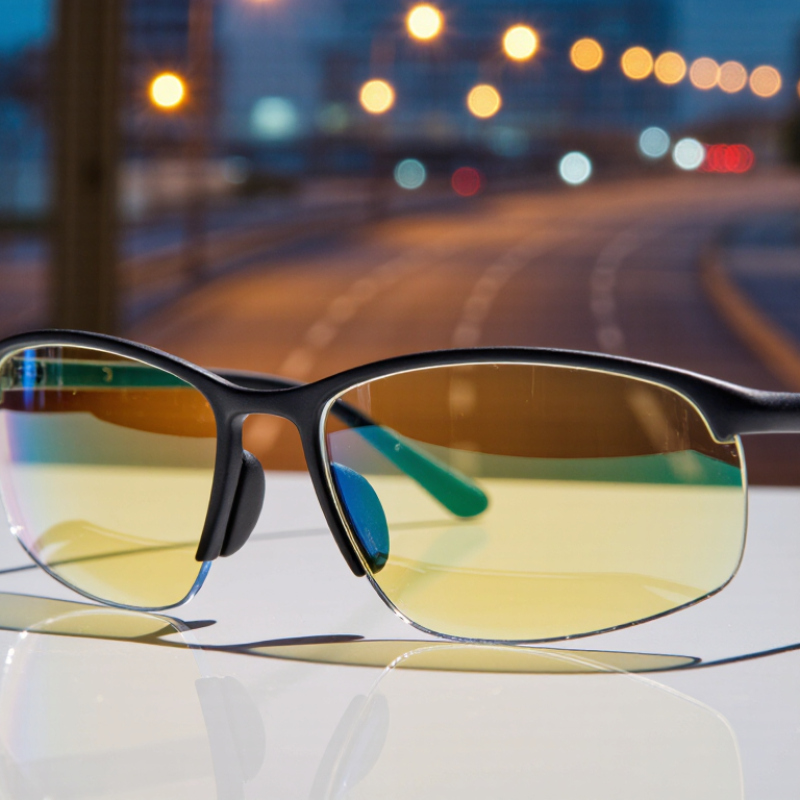
| 3. Be cautious with yellow or dark tints | For driving after dark, choose lenses that preserve visible light. Yellow tints have not been shown to reliably improve night-driving vision. | Skip add-on tints unless an eye-care professional recommends them for a specific need. | Keep tinted sunglasses for bright conditions rather than using them at night, when reducing incoming light can make it harder to see. |
| 4. Check photochromic lenses for your use case | Ask how the lenses behave in a car. Many windshields block much of the UV light that activates photochromic lenses, so darkening may be limited. | Photochromic lenses can cost more than clear lenses. Compare the added convenience with how often you will use it. | Confirm the product’s care instructions and expected performance in a vehicle before buying; activation and fade-back times vary by lens design and conditions. |
| 5. Avoid polarized sunglasses for night driving | Polarized lenses are designed to reduce reflected glare in bright conditions, not to improve vision in darkness. | Do not pay extra for polarization in a pair intended for use after dark. | Reserve polarized sunglasses for appropriate daytime use. Keep a clear pair available for night-time tasks. |
| 6. Match lens material and durability to your routine | Compare lens material, weight, impact resistance, and suitability for your prescription with an eye-care professional. | Basic materials may cost less, while thinner or more impact-resistant options may cost more. The best choice depends on prescription and use. | Use a protective case and avoid leaving eyewear in excessive heat. Replacing scratched lenses can be safer and more cost-effective than continuing to use them. |
| 7. Compare the full cost, not just the lens price | Review the frame, lens options, coating, fitting, warranty, and replacement policy together before purchasing. | Ask for an itemized quote and compare the total cost of equivalent options rather than choosing by the starting price alone. | Check what the warranty covers and follow the recommended cleaning routine. Proper care can help protect the lenses and coatings over time. |