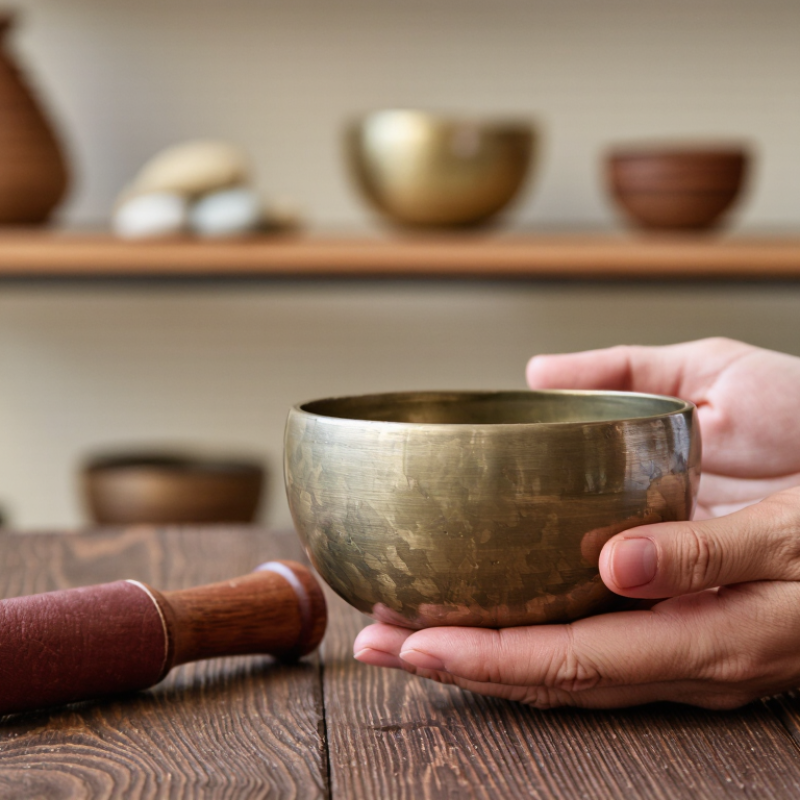
| 1Define the intended use | Primary activity | Meditation, relaxation, yoga, sound baths, mindfulness exercises, room decoration, or musical practice | Choose the bowl according to how often and where it will be used | A bowl used for personal meditation does not need the same projection or size as one used to fill a large room. | Write down the main use and the typical room size before comparing bowls. |
| 2Choose a practical diameter | Approximate bowl diameter | 10–15 cm: portable and higher-pitched
15–25 cm: versatile for personal practice
25–35 cm: deeper tone and stronger resonance | Small personal spaces, general home use, or larger group sessions | Larger bowls generally produce lower tones and can provide longer resonance, while smaller bowls are easier to carry and handle. | Confirm that the bowl fits comfortably in your hand, on its cushion, and in its storage space. |
| 3Consider the sound profile | Tone, sustain, volume, and overtones | Bright and clear, warm and mellow, deep and resonant, short sustain, or long sustain | Focused meditation, gentle relaxation, guided sessions, or sound-based performance | Sound preference is subjective. A comfortable tone is more important than choosing a bowl based only on appearance or size. | Strike the bowl lightly and listen for at least 10 seconds to assess clarity and sustain. |
| 4Review the material and construction | Metal composition, wall thickness, and manufacturing method | Hand-hammered bowls may have visible texture and individual tonal variation. Machine-finished bowls often have more uniform shape and appearance. | Buyers who prefer individuality, consistent design, traditional appearance, or easier matching | Construction affects weight, surface appearance, durability, and the way the bowl vibrates. Similar-looking bowls may sound different. | Inspect the rim, base, and inner surface for cracks, sharp edges, dents, or unstable construction. |
| 5Match the bowl to your space | Room size, acoustics, and sound level | Small bowl for a quiet room; medium bowl for general home use; larger bowl for spacious rooms or group activities | Bedrooms, meditation corners, studios, classrooms, and larger wellness spaces | Hard surfaces such as tile and glass reflect sound, while carpets, curtains, and upholstered furniture absorb some sound. | Test the bowl in the actual room if possible, especially if other people will be present. |
| 6Check handling and accessories | Weight, stability, cushion, and striker | A correctly sized cushion should support the bowl without covering too much of its base. A soft or padded striker is useful for gentler sounds. | Beginners, frequent users, practitioners with limited grip strength, and mobile setups | Proper support helps the bowl vibrate freely and reduces unwanted movement during striking or rubbing. | Place the bowl on its cushion and verify that it sits level without wobbling. |
| 7Prioritize personal comfort and care | Feel, appearance, maintenance, and budget | Select a tone and finish that you enjoy, then compare weight, workmanship, care requirements, and total cost. | Long-term personal use and buyers seeking a meaningful daily practice tool | A bowl is more likely to be used regularly when its sound, tactile feel, and appearance are personally appealing. | Avoid abrasive cleaners, protect the bowl from hard impacts, and choose the bowl you genuinely enjoy hearing. |