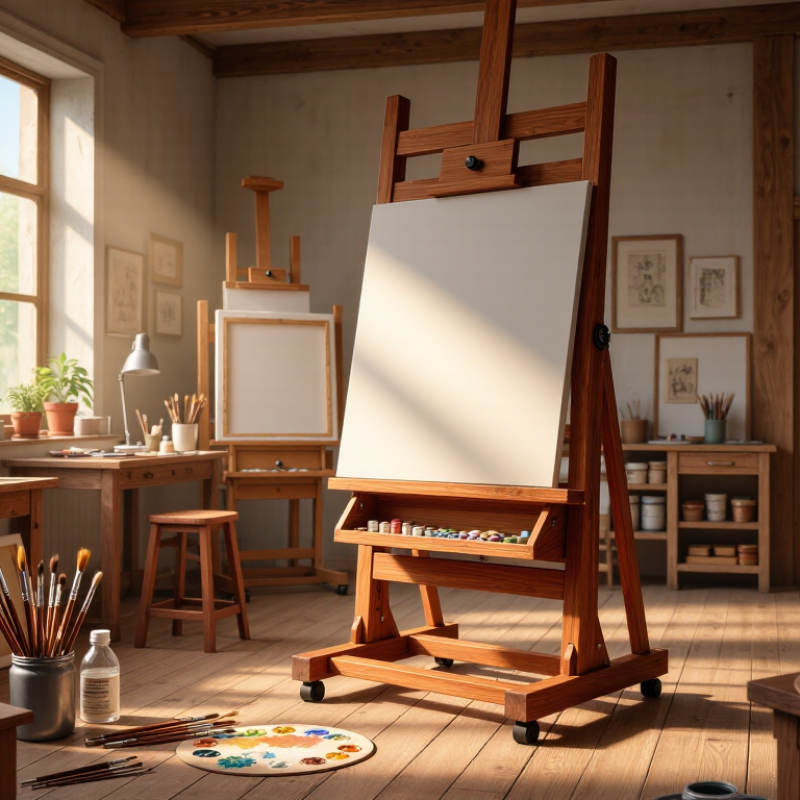
| 1 | Maximum Canvas Size | Choose an easel rated for a canvas at least 5–10 cm wider and taller than your largest planned artwork. | Confirm the maximum canvas height, width, and support height in the product measurements. | Extra clearance makes loading easier and reduces contact between the frame and the upper mast. |
| 2 | Canvas and Artwork Weight | Select a rated load capacity at least 25% higher than the heaviest wet or framed artwork. | Add the canvas, stretcher bars, frame, wet paint, and any attached accessories before comparing capacity. | A safety margin helps prevent slipping, excessive vibration, and premature hardware wear. |
| 3 | Adjustable Working Angle | Look for a secure tilt range that includes approximately 15°–30° from vertical. | Test the locking mechanism at several angles, especially around 15°, 22°, and 30°. | A moderate forward tilt can improve viewing comfort and help reduce glare on the painting surface. |
| 4 | Height Adjustment | The lower support should adjust to a comfortable position for both sitting and standing. | Check the minimum and maximum support heights, adjustment increments, and locking points. | Correct positioning helps keep the main working area near eye level and limits back or neck strain. |
| 5 | Base Footprint and Stability | Prefer a wide, fully opened base with three stable contact points or a reinforced four-leg structure. | Apply light pressure to the upper mast and check for rocking, twisting, or uneven feet. | A stable base is essential for controlled brushwork and reduces the risk of tipping. |
| 6 | Wood Construction | Choose straight, well-seasoned hardwood or laminated wood with properly aligned grain and joints. | Inspect for cracks, open knots, warping, rough edges, and loose dowel or screw connections. | Dry, sound wood is less likely to deform and provides more reliable long-term support. |
| 7 | Canvas Support Lip | The lower ledge should be wide enough for the stretcher depth and finished with a smooth, non-damaging surface. | Verify that the lip supports the entire lower edge without covering the painted area or catching fabric. | A properly sized ledge keeps the canvas level and prevents dents or scratches. |
| 8 | Locking Hardware | Use threaded knobs, locking pins, or cam locks that hold firmly without requiring excessive force. | Open and close every adjustment several times; check whether locks remain tight under moderate pressure. | Reliable hardware prevents sudden movement while painting or changing the angle. |
| 9 | Foot Protection and Floor Grip | Select non-marking rubber or felt feet that remain firmly attached to the wooden legs. | Place the easel on a smooth floor and test for sliding, especially when the mast is tilted. | Protective feet improve traction and help prevent scratches on finished flooring. |
| 10 | Storage and Maintenance | Choose a folding design only if its folded dimensions and weight suit your storage area and transport needs. | Check folded height, depth, carrying weight, cleaning access, and whether moving parts can be tightened or replaced. | Convenient storage encourages regular use and makes it easier to protect the wood from moisture and dust. |