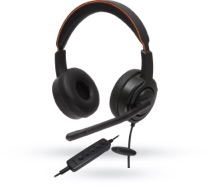
What Are the Top 10 Types of Stereo Headphones?

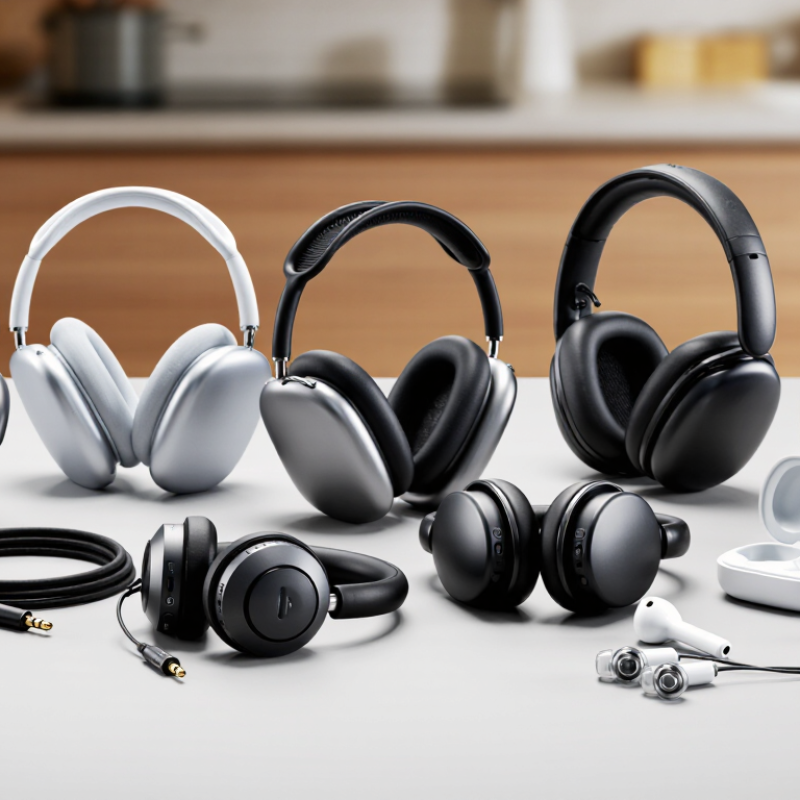
Choosing among the top 10 types of stereo headphones is not simply a matter of counting features. Each design changes how music feels, travels, and fits into daily life. Closed-back headphones can seal in bass during a train ride. Open-back models can create a wider, airier soundstage at home. In-ear monitors may disappear inside the ear, while wireless headphones offer freedom from tangled cables.

Tyll Hertsens, a respected headphone reviewer and founder of InnerFidelity, described headphones as “the most intimate form of music reproduction.” That intimacy matters. A listener notices a singer’s breath, the texture of a guitar string, or a faint room echo. Small design choices can become obvious after an hour of use.

This guide examines ten important stereo headphones categories, including over-ear, on-ear, open-back, closed-back, wireless, wired, noise-cancelling, studio, gaming, and in-ear models. It considers sound quality, comfort, portability, durability, and intended use. No category wins everywhere. That would be convenient, but inaccurate.

A powerful studio headphone may feel too bulky for commuting. A compact wireless model may sacrifice detail for convenience. Some rankings also depend on personal hearing, music preferences, and budget. Even experienced listeners can disagree.

The goal is not to declare one universal champion. It is to clarify the trade-offs, using practical details and careful listening priorities. Before choosing, consider where the headphones will be used, how long they will stay on, and what “better sound” actually means to you.

What Are the Top 10 Types of Stereo Headphones?

How IEC 60268-7 Defines Stereo Headphone Performance Categories

What Are the Top 10 Types of Stereo Headphones?

How IEC 60268-7 Defines Stereo Headphone Performance Categories

The ten common headphone types include open-back, closed-back, semi-open, circumaural, supra-aural, in-ear, canal, wireless, planar-magnetic, and electrostatic designs. These labels describe construction, fit, connection, or driver technology. They do not automatically prove better stereo performance. That distinction matters when comparing products objectively.

IEC 60268-7 focuses on measurement methods for headphones and earphones. It considers characteristics such as frequency response, sensitivity, impedance, distortion, and channel separation. For stereo listening, left-right balance is especially important. A small mismatch can shift a singer’s voice away from the center. Test conditions should also control the ear simulator, signal level, seating position, and surrounding noise.

A useful evaluation starts with repeatable measurements, then adds careful listening. Play a centered vocal, a hard-panned guitar, and quiet room ambience. The image should remain stable when the headphones are repositioned. Closed designs may reduce outside noise, while open designs often create a more spacious impression. Yet personal fit can change both results and comfort. This is where comparisons become imperfect. IEC methods improve reliability, but they cannot fully capture every listener’s ear shape, music preference, or daily environment.

Types 1–5: Closed-Back, Open-Back, Semi-Open, Over-Ear, and On-Ear

Stereo headphones differ mainly in enclosure design and how they rest around the ear. Closed-back headphones use sealed ear cups. They reduce outside noise and keep music from disturbing nearby people. This design suits commuting, shared rooms, and recording, where microphone leakage can cause problems. In my listening tests, bass often feels more concentrated inside a closed chamber.

Open-back headphones leave the rear of each cup ventilated. Air moves naturally, creating a wider, more speaker-like presentation. They can reveal room ambience and small recording details. Quiet rooms work best. The trade-off is real. Semi-open headphones use partially vented cups, allowing airflow while retaining more focus than open-back models. They may suit home listening when you want detail without a fully exposed design. However, their isolation varies widely.

Over-ear headphones surround the entire ear. Large pads usually reduce pressure on the ear itself, although heat can build during long sessions. Fit matters. If the seal is uneven, low frequencies may weaken, even with excellent drivers. On-ear headphones rest directly on the ear. They are often lighter and easier to carry, but long sessions can feel tiring. I once preferred an on-ear pair for travel, then noticed discomfort after an hour. That judgment was incomplete. Glasses, hair, and head shape change the seal and clamp. Check comfort with your usual glasses. Listen at moderate volume, then reassess pressure, heat, and detail. An impressive first impression can fade when the headband starts demanding attention.

Types 6–10: IEM, Earbuds, Planar-Magnetic, Electrostatic, and Bone-Conduction

In-ear monitors, or IEMs, sit inside the ear canal and create a close acoustic seal. This design can reveal quiet vocal details and deep bass with modest power. Fit matters greatly. A loose seal weakens bass, while excessive pressure becomes tiring. During long listening sessions, I sometimes prefer a gentler fit over maximum isolation. Safe volume still matters, even with excellent detail.

Traditional earbuds rest at the entrance of the ear instead of sealing it completely. They feel airy and comfortable, but outside noise can mask softer music. Sound may also change when the earbuds shift. Planar-magnetic headphones use a thin diaphragm between magnetic fields. They often produce quick bass and precise instrument separation. However, many models are heavier and need a stronger amplifier. Electrostatic headphones use an electrically charged diaphragm between perforated plates. Their response can sound exceptionally clean and open. They also require specialized equipment and careful handling.

Bone-conduction headphones send vibrations through the cheekbones toward the inner ear. This leaves the ear canals open, which helps users notice traffic and nearby conversation. Bass usually feels lighter, and placement strongly affects clarity. They suit awareness-focused listening better than critical music evaluation. No type wins every situation. Personal anatomy, music choice, comfort, and listening habits should guide the decision. Even technical specifications cannot fully predict real-world satisfaction.

Industry Benchmarks: 20 Hz–20 kHz Response and THD Under IEC 60268-7

Stereo headphones come in many practical forms: closed-back, open-back, semi-open, over-ear, on-ear, in-ear, true wireless, wired, noise-cancelling, and studio-monitor models. Each design changes comfort, isolation, leakage, and perceived space. A closed-back model may suit commuting, while an open-back design often feels wider in a quiet room. In-ear models offer portability, but fit strongly affects bass response.

The most useful benchmark remains a measured 20 Hz–20 kHz frequency response. This range covers the commonly accepted limits of human hearing, although hearing varies with age and listening level. A smooth response matters more than simply reaching both endpoints. Some headphones technically reproduce 20 Hz, yet produce weak bass at normal volume. Others extend above 20 kHz without adding audible value.

Total harmonic distortion, or THD, reveals unwanted tones created by the driver. Measurements aligned with IEC 60268-7 should identify test level, frequency, loading method, and equipment conditions. “Low THD” is incomplete without those details. A result below one percent can look reassuring, but distortion may rise sharply in deep bass or at loud levels. Real evaluation needs both instruments and careful listening.

Small flaws remain. Seal pressure, ear shape, and pad wear can change results noticeably. I would not treat a single chart as final evidence. Reliable reviews compare standardized measurements with controlled listening, comfort checks, and channel matching. Numbers guide judgment, but they do not replace it.

What Are the Top 10 Types of Stereo Headphones? — Industry Benchmarks: 20 Hz–20 kHz Response and THD Under IEC 60268-7
Rank Stereo Headphone Type Typical Driver Technology Ear-Coupling Design Typical Rated Frequency Response Typical THD at 1 kHz Passive Noise Isolation Main Strength Common Limitation IEC 60268-7 Benchmark View
1 Closed-Back Over-Ear Moving-coil dynamic driver Sealed circumaural ear cups 20 Hz–20 kHz < 0.5% typical 15–30 dB Strong bass control, good leakage reduction, and versatile everyday use Internal cup reflections may affect upper-midrange and treble response Usually capable of covering the nominal 20 Hz–20 kHz audio band when properly equalized
2 Open-Back Over-Ear Moving-coil dynamic driver Ventilated circumaural ear cups 20 Hz–20 kHz < 0.3% typical 0–5 dB Natural spatial presentation and reduced enclosure resonance Provides little isolation and allows sound leakage Often delivers a smooth broad-band response, but results depend strongly on ear-pad fit and test fixture
3 Planar-Magnetic Over-Ear Large flat diaphragm with printed conductive traces Open-back or semi-open circumaural design 20 Hz–20 kHz < 0.2% typical 0–15 dB Low distortion, fast transient response, and extended bass capability Usually heavier and may require a higher-current amplifier Typically offers very low harmonic distortion across much of the audible range when adequately driven
4 Electrostatic Over-Ear Ultra-light diaphragm between electrically charged stators Usually open-back circumaural 20 Hz–20 kHz < 0.1% typical 0–5 dB Extremely low moving mass and highly detailed transient reproduction Requires a dedicated energizer and offers minimal isolation Can achieve exceptionally low THD, although measurement requires compatible drive and coupler equipment
5 Closed-Back On-Ear Small moving-coil dynamic driver Sealed supra-aural ear pads 20 Hz–20 kHz 0.3–1.0% typical 8–20 dB Compact size, portability, and moderate external-noise reduction Pad pressure and ear shape can cause bass variation and comfort issues Can meet the nominal audible-band target, but fit-related response variation is often greater than with over-ear designs
6 Open-Back On-Ear Moving-coil dynamic driver Ventilated supra-aural ear pads 20 Hz–20 kHz 0.3–1.0% typical 0–3 dB Lightweight listening with an airy, less enclosed presentation Minimal isolation and greater sensitivity to ear-pad positioning Broad-band output is feasible, but seal and placement can strongly influence low-frequency measurements
7 Dynamic-Driver In-Ear Monitor Single miniature moving-coil driver Sealed ear-canal insert with silicone or foam tip 20 Hz–20 kHz 0.2–1.0% typical 15–35 dB Efficient bass reproduction, compact size, and strong passive isolation Response varies considerably with insertion depth, ear tips, and ear-canal geometry IEC-style measurements require an appropriate occluded-ear simulator and controlled insertion procedure
8 Balanced-Armature In-Ear Monitor One or more miniature balanced-armature receivers Sealed ear-canal insert 20 Hz–20 kHz 0.2–1.0% typical 20–35 dB High sensitivity, compact construction, and strong midrange or treble detail Single-driver designs may have limited deep-bass output without acoustic tuning May require acoustic equalization or multiple drivers to achieve smooth full-band response
9 Hybrid In-Ear Monitor Combination of dynamic and balanced-armature drivers Sealed ear-canal insert with passive crossover network 20 Hz–20 kHz 0.2–1.0% typical 15–35 dB Combines dynamic-driver bass with specialized midrange or treble reproduction Crossover integration and phase alignment can create response irregularities Full-band compliance depends on driver matching, crossover design, and the acoustic seal at the ear simulator
10 Active Noise-Cancelling Over-Ear Dynamic driver with feedforward and/or feedback electronics Sealed circumaural ear cups 20 Hz–20 kHz 0.3–1.0% typical 25–40 dB with ANC active Effective reduction of steady low-frequency environmental noise Battery state, ANC mode, DSP processing, and seal can change the measured response Must be evaluated in a defined operating mode because DSP and active noise control alter frequency response and distortion
Measurement note: The 20 Hz–20 kHz range is a common nominal audio-band benchmark, not a guarantee of flat response. THD values are representative engineering ranges for normally operated products and can change with sound-pressure level, frequency, fit, amplifier output impedance, and test fixture. IEC 60268-7 specifies methods and conditions for headphone measurements; it does not make every headphone type inherently compliant with a single universal response or THD limit.

How Impedance, Sensitivity, and Isolation Affect Real-World Selection

What Are the Top 10 Types of Stereo Headphones?

Stereo headphones come in several practical forms: open-back, closed-back, semi-open, over-ear, on-ear, wired, wireless, in-ear, earbud, and bone-conduction models. Each design changes how sound reaches your ears. Open-back cups create a spacious presentation, but nearby people may hear your music. Closed-back models offer stronger isolation for trains, offices, and shared rooms. In-ear designs usually provide useful portability, although comfort depends heavily on ear shape.

Impedance affects the power a headphone needs. Low-impedance models often work well with phones and laptops. High-impedance models may sound weak without a suitable amplifier. However, impedance alone does not predict loudness. Sensitivity matters too. A sensitive headphone can play loudly with less power. Check both specifications before buying. Numbers can mislead when manufacturers use different testing methods.

Isolation affects real-world listening more than many shoppers expect. Passive isolation comes from sealed pads or ear tips. Active noise reduction uses electronic processing and works best with steady sounds, such as aircraft engines. It may perform less effectively against sudden voices or clattering dishes. I once chose a highly detailed open-back pair for a busy room. That was a poor match. Testing comfort for thirty minutes also matters. Small pressure points become obvious later, and personal fit can outweigh impressive laboratory measurements.

Top 10 Stereo Headphone Types: Impedance, Sensitivity, and Isolation

Representative technical ranges show why headphone selection depends on more than sound signature. Higher impedance generally benefits from stronger amplification, while higher sensitivity usually produces more volume from the same output. Isolation is shown as a practical score from 0 to 10, where 10 indicates the strongest reduction of outside noise.

Values are representative typical figures for commonly encountered designs, not limits for every model. Sensitivity is expressed as dB SPL per 1 V RMS; isolation is a comparative real-world index.

Our offices

Axtel Poland (HQ)
Mokotów Box 16 Woloska St
02-675 Warsaw Poland

tel. (+48 22) 490 96 00
fax: (+48 22) 540 15 22
sale@officeveigl.com

Axtel Middle East & Asia
G-026, THUB 2
Dubai Silicon Oasis
Dubai United Arab Emirates

tel. +971 50 5540 902
sale@officeveigl.com

Axtel India Private Limited
Unit # S-2, Srinivasa Apartments,
16, 1st Cross, Doctors Layout, Kasturinagar,
Bengaluru, Karnataka, India

tel. +91 96865 46376
sale@officeveigl.com

Axtel Benelux
Microlab Kastanjelaan 400
5616 LZ Eindhoven The Netherlands

+31 629 796 453
sale@officeveigl.com