Top China Wholesale Home Theater Seat Suppliers?
Choosing a supplier for Wholesale Home Theater Seats means looking beyond upholstery samples. Buyers need to assess frame construction, recline mechanisms, foam density, stitching, packaging, and replacement-part support. Comfort is personal. A seat that feels soft in a showroom may lose support after years of daily use, so request material specifications and inspect samples under realistic conditions.
The wider market offers useful context, but it does not prove demand for theater seating alone. Grand View Research estimated the global furniture market at about US$677 billion in 2023, while the Consumer Technology Association’s 2024 U.S. Consumer Technology Industry Forecast projected US$512 billion in U.S. consumer technology retail revenue. These reports describe adjacent markets, not wholesale theater-seat sales. Treat them as context, not a purchasing guarantee. A supplier’s actual lead times, minimum order quantities, quality-control records, and shipping protection matter more to a buyer’s project.
A practical comparison should include seat dimensions, fabric durability, motor warranty, carton size, and whether replacement parts can be ordered separately. Ask suppliers how they test recliners and handle damaged shipments. Then compare written specifications, not just showroom impressions. One limitation matters: no verifiable, published quotation from a named Wholesale Home Theater Seats specialist was provided, so attributing a quote would risk inventing expertise. A careful shortlist, supported by sample inspection and clear terms, is a stronger starting point than a polished slogan.
Overview of China’s Wholesale Home Theater Seating Market
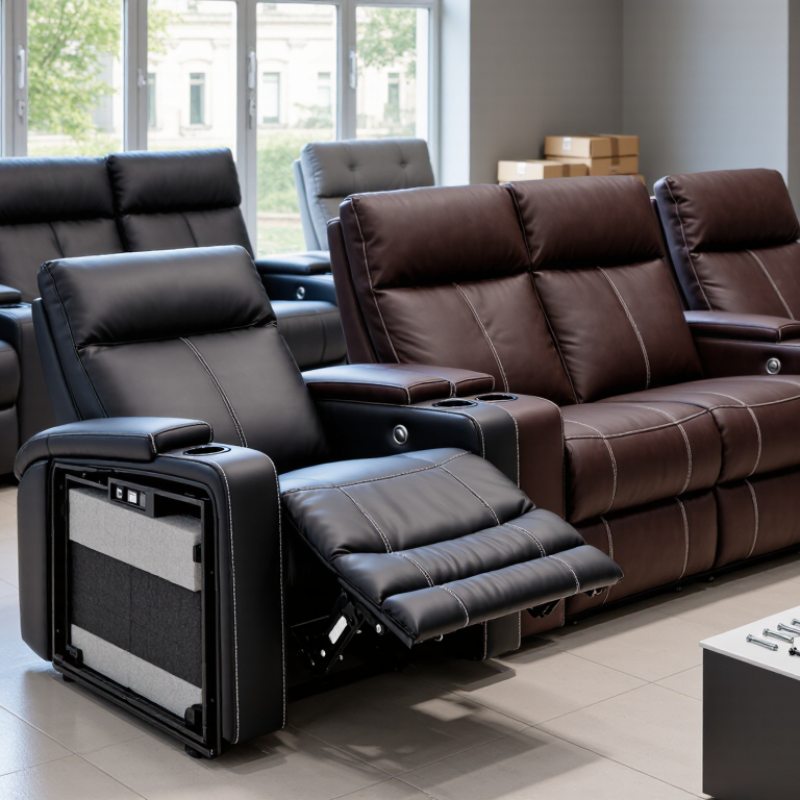
China’s Wholesale Home Theater Seating market sits within a much larger furniture manufacturing base. The National Bureau of Statistics of China reported 2023 operating revenue of aboutRMB 655.6 billion for above-scale furniture manufacturers, down 4.4% year over year. This figure covers furniture broadly, not theater seats alone. CSIL’s World Furniture Outlook 2024 estimates that China accounts for roughly 36% of global furniture production. This scale offers broad sourcing options, but it does not guarantee consistent upholstery or mechanism quality.
Suppliers typically quote by configuration: fixed or reclining frames, manual or powered motion, upholstery, cup holders, and seat spacing. A showroom sample may look convincing. Check frame joints, recline movement, stitching, foam recovery, and carton protection on production samples. Ask for load-test methods and written tolerances, not just demonstrations. For project orders, clarify whether controls, wiring, and replacement parts are included. Lead times can shift when motors, fabrics, or custom dimensions change. Demand is uneven. Public data rarely separates home theater seats from sofas and recliners, so broad furniture statistics are context, not a market-size forecast. Unit price alone can mislead; installation access, packaging damage, and spare parts also affect landed cost.
Types of Suppliers and Their Product Specialties
China’s wholesale home theater seat market includes factory-direct manufacturers, export trading companies, and specialist seating suppliers. Each serves a different purchasing need. Factory-direct producers often manage frame construction, foam density, upholstery, and power-recliner assembly under one roof. They may offer tighter control over dimensions and repeat orders, but custom samples can extend lead times. Trading companies can consolidate seats, cup holders, and spare parts from several workshops. That convenience helps smaller buyers, though production details may be less visible. Ask who makes the frame and motor, not just who issues the quote.
Specialist suppliers often focus on cinema-style rows, compact recliners, or configurable seating for private theaters. Their ranges may include wall-hugging mechanisms, removable headrests, storage consoles, and stain-resistant fabric. Check dimensions against the room plan, including recline clearance and aisle width. Ask for a sample. Sit in it if possible; comfort varies. For larger orders, request material specifications, load-test information, carton dimensions, and a written inspection process. Compare warranty coverage and replacement-part availability, since a broken switch can matter more than decorative stitching. A fit is never perfect. Even careful checks may miss differences between a showroom sample and a production batch, so agree on measurable standards before payment.
How to Assess Supplier Quality and Manufacturing Capabilities
A polished showroom sample proves little. Ask for the production bill of materials, steel thickness records, foam-density specifications, and inspection logs. For powered recliners, inspect wiring protection, actuator mounting, and repeated open-close test results. Request test reports for the complete seat, not just individual components. ANSI/BIFMA X5.4-2020 provides relevant durability and stability test methods for lounge seating. Check whether the supplier uses comparable documented procedures and can show actual results. ISO’s 2022 Survey counted 1,265,216 ISO 9001 certificates worldwide; certification indicates a quality-management system, not flawless chairs. Look closer.
Assess the factory floor, too. Watch workers assemble a frame, route cables, and fit upholstery. Check weld consistency, foam recovery, stitching, and whether mechanisms move smoothly under load. Ask how defects are recorded and corrected, then compare those records with a recent production batch. A capable supplier should explain tolerances clearly and provide traceable material documentation. Yet one visit can mislead: a prepared sample may differ from routine output. Request a pre-shipment inspection on randomly selected units, with photos and a written defect log. I would still treat a small sample as imperfect evidence; wear, noise, and fit problems can emerge only after repeated use.
How to Assess China Wholesale Home Theater Seat Suppliers
Suggested evaluation weights for comparing supplier quality and manufacturing capabilities—not measured supplier or industry survey results.
How to use this chart: Request supporting evidence for each area, such as inspection records, production capacity details, material specifications, customization samples, and documented lead-time performance. Adjust the weights to fit your project requirements.
Customization, Compliance, and Bulk Order Considerations
When comparing China-based wholesale home theater seat suppliers, treat customization as a controlled specification, not a color choice. The global furniture market reached an estimated USD 652.4 billion in 2023, according to Grand View Research’s Furniture Market Size, Share & Trends Analysis. That broad figure signals a large supply base, but it does not prove demand for theater seats. Ask for a written configuration sheet covering seat width, foam density, reclining mechanism, upholstery, cup holders, and power options. Small details matter. A cable outlet placed on the wrong side can complicate installation.
Compliance must match the destination market and the exact product configuration. Request material declarations, test reports, and traceable component records. Check upholstery and foam fire-performance requirements, plus electrical safety documentation for powered models. Do not assume a certificate for one fabric covers every fabric. That mistake is easy to make. I would also verify frame load and recline-cycle testing, even when the supplier’s sample feels solid.
Bulk orders need packaging data before price comparisons. UNCTAD’s Review of Maritime Transport 2024 notes that maritime transport carries over 80% of world trade by volume. Ask suppliers for carton dimensions, cubic volume per seat, container-loading plans, and spare-part quantities. Approve a production sample, then confirm acceptable tolerances in writing. One awkward point remains: the lowest unit quote may lose its appeal after damaged cartons, missing cables, or inconsistent stitching arrive.
Pricing, Shipping, and Supplier Verification in China
China’s home theater seat prices depend on more than the frame. Reclining mechanisms, upholstery, foam density, power features, and custom stitching all affect the quote. Ask for a line-by-line breakdown, including packaging and sample costs. A very low price may leave out important details. Compare matching specifications, not just totals. Even then, estimates can shift after final measurements.
Shipping costs depend on order volume, carton size, destination, and the agreed delivery terms. Request the packed dimensions and gross weight for each carton. Confirm the production lead time, port or delivery point, and who handles freight booking and cargo insurance. Get these details in writing. Large seats need protective packaging. Check how the supplier manages scratches, crushed corners, or missing parts before approving the order.
Supplier verification deserves the same care as pricing. Request a current business license and confirm that the company’s stated role matches its production capabilities. Arrange a live video walkthrough of the workshop, and ask to see the upholstery and mechanism assembly areas. A sample order can reveal stitching quality and recline noise, though one sample cannot prove every unit will match. Consider an independent pre-shipment inspection against your approved specifications. I would not rely on polished photos alone; they are easy to misread.