| Strength and durability | Seats are designed and tested for repeated use in non-domestic settings. | Applicable test reports, including testing against EN 12727:2016 where relevant to the product and market. | Provides documented information about performance under defined test conditions. |
| Fire and material compliance | Upholstery, foam, and other specified materials can be selected to meet the project’s applicable fire-safety rules. | Current certificates or test reports that identify the tested material, configuration, and applicable jurisdiction or standard. | Fire-safety requirements differ by location and project, so claims should be checked against local rules. |
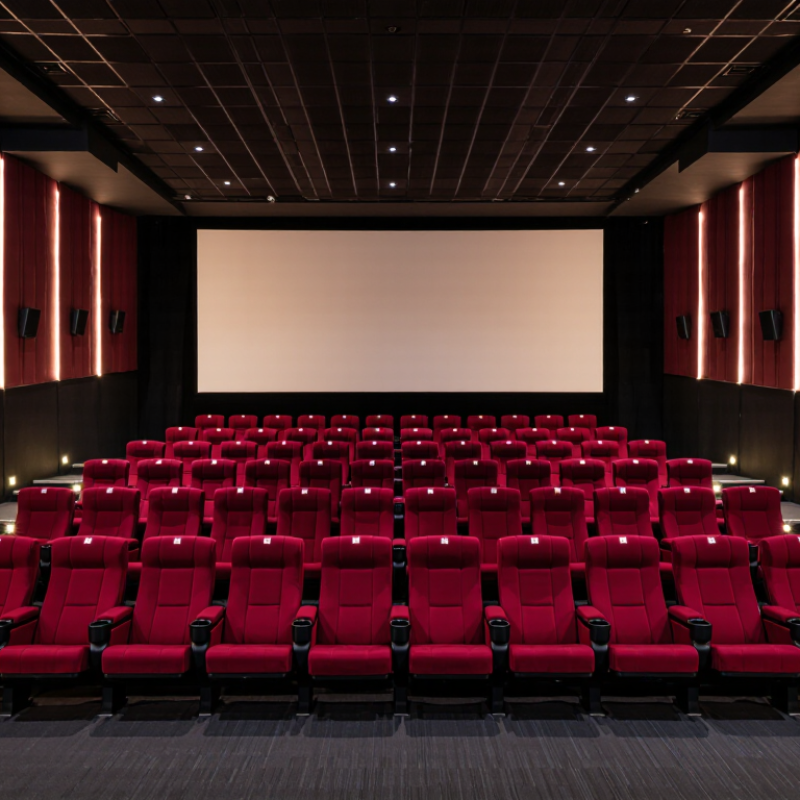
| Comfort and ergonomics | Seat dimensions, support, recline options, and finishes are specified clearly for the intended auditorium and audience. | Dimensioned drawings, physical samples, and a full-size mock-up where appropriate. | Comfort and fit are easier to assess against the actual room layout than from product images alone. |
| Space and sightline planning | The supplier provides accurate seat footprints and installation data to support row spacing, aisle planning, and sightline coordination. | CAD or BIM files, layout drawings, and project-specific coordination documents. | Reliable dimensions help designers coordinate seating with circulation and auditorium geometry. |
| Accessibility options | The seating plan can accommodate the accessible seating and companion-space arrangements required by the project. | Project layouts reviewed against applicable local accessibility requirements. | Accessibility rules are jurisdiction-specific and should be confirmed for each venue. |
| Product configuration | Available configurations and options are documented, including fixed or reclining formats and specified upholstery choices. | Product schedules, option lists, finish samples, and written confirmation of the ordered specification. | Clear specifications reduce ambiguity during design, procurement, and installation. |
| Quality management | The manufacturer can explain its inspection and quality-control processes and provide relevant supporting documentation. | Quality-system documentation and, where claimed, a current ISO 9001 certificate whose scope covers the relevant operations. | A certificate’s validity and scope should be verified; certification alone does not establish product performance. |
| Installation and delivery support | The supplier defines delivery responsibilities, installation requirements, and coordination steps for the project. | Written scope of work, installation instructions, schedule, and site-preparation requirements. | Clear responsibilities help manage timing and handoffs between suppliers and project teams. |
| Maintenance and spare parts | Maintenance guidance and information about replacement components are available for the selected seating model. | Care instructions, parts lists, warranty terms, and written details on parts ordering and support. | Documented support helps venue operators plan upkeep and repairs. |
| Sustainability documentation | Environmental claims are specific to the product or material and supported by documentation. | Product-specific environmental declarations or verified material and recycled-content records, where available. | Specific evidence is more useful for procurement decisions than broad, unverified claims. |