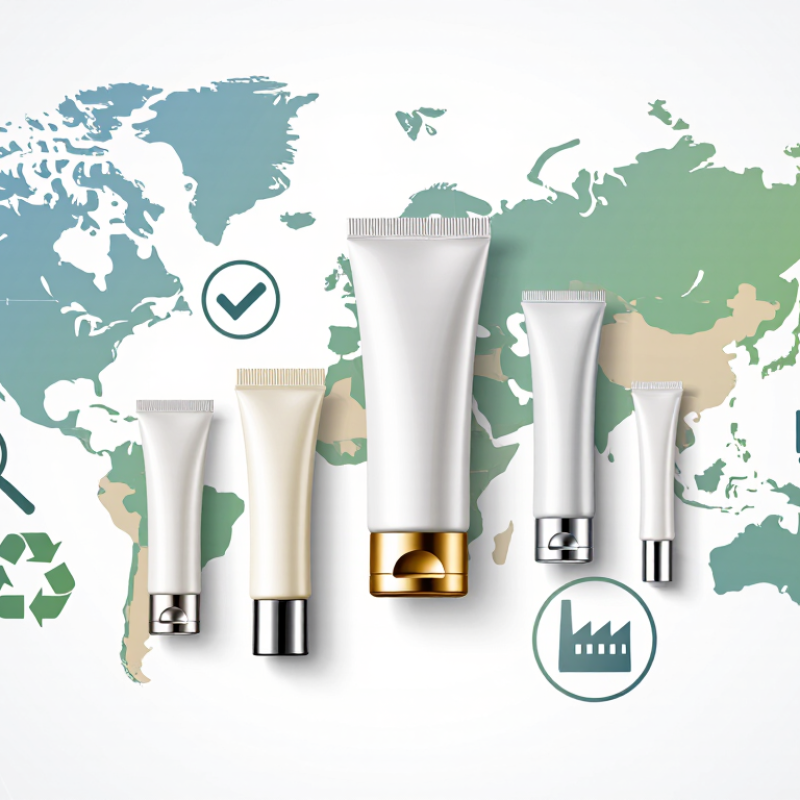
| Definition | Cosmetic tubes manufactured with post-consumer recycled plastic blended into, or used for, the tube body or selected components. | PCR resin is recovered from consumer-used plastic packaging and processed into new packaging material. | It helps incorporate recycled material into packaging while maintaining a familiar tube format. |
| Common Materials | Polyethylene, including HDPE and LDPE, is commonly used for cosmetic tube bodies, shoulders, and caps. | Material selection depends on product compatibility, flexibility, barrier needs, decoration, and local recycling systems. | The resin must protect the formula and meet the required appearance and dispensing performance. |
| PCR Content Level | The percentage of post-consumer recycled resin used in the tube or a specific component. | Available content varies by tube construction, resin quality, color requirements, performance targets, and regional supply. | A clear PCR percentage supports environmental claims and allows packaging teams to compare quotations accurately. |
| Recyclability | Recyclability refers to whether the complete package can be collected, sorted, processed, and reused in an actual recycling system. | A mono-material polyethylene design is generally easier to assess for recycling than a structure combining incompatible materials. | PCR content and recyclability are different attributes; both should be reviewed before making packaging claims. |
| Sustainability Benefit | PCR tubes give previously used plastic a new packaging application and can reduce reliance on virgin plastic feedstock. | Environmental benefits depend on PCR source, manufacturing energy, transport, formula compatibility, and end-of-life conditions. | Brands can improve packaging circularity when the material choice is supported by transparent evidence. |
| Appearance | PCR resin may create natural variation in color, opacity, surface appearance, or odor compared with virgin resin. | Dark, opaque, or standardized color systems can help mask variation, while light or translucent finishes may require tighter controls. | Early approval of color standards reduces the risk of visual inconsistency during mass production. |
| Barrier Performance | Barrier performance is the tube's ability to limit exposure to oxygen, moisture, light, or other external factors. | Barrier requirements vary by formula; some products may need multilayer construction or an additional barrier solution. | The packaging must preserve product stability throughout its stated shelf life. |
| Product Compatibility | Compatibility testing checks for interaction between the formula and the tube, shoulder, cap, decoration, or seal. | Testing may include migration, odor, discoloration, leakage, stress cracking, and long-term stability assessments. | A supplier should provide samples and support formula-specific validation before commercial production. |
| Decoration Options | PCR tubes can support common decoration methods such as offset printing, flexographic printing, labeling, and selected finishing processes. | Decoration compatibility depends on the tube surface, resin blend, ink system, curing process, and recycling objectives. | Brands can balance shelf impact with a package design that remains practical for recycling and production. |
| Typical Applications | PCR tubes are used for products such as creams, lotions, gels, cleansers, masks, balms, and some personal-care formulas. | The most suitable tube depends on viscosity, fill volume, dispensing method, closure type, and formula sensitivity. | The format offers familiar consumer handling and efficient product dispensing across many categories. |
| Supplier Qualification | A qualified supplier should document material origin, PCR percentage, manufacturing controls, quality procedures, and traceability. | Important checks include technical data sheets, certificates of analysis, batch traceability, quality standards, and change-control procedures. | Documented controls help reduce supply, quality, compliance, and environmental-claim risks. |
| Global Supply Considerations | Worldwide supply capability includes production capacity, regional logistics, tooling support, lead times, and local compliance knowledge. | Availability of PCR resin and recycling infrastructure differs by region, so specifications should be confirmed for each target market. | Regional planning can improve continuity of supply and prevent differences between production locations. |
| Cost Factors | PCR tube pricing is influenced by PCR resin availability, PCR percentage, structure, decoration, tooling, order volume, and testing requirements. | PCR pricing can fluctuate because recycled feedstock supply and processing costs vary over time and by region. | A total-cost comparison should include tooling, testing, decoration, logistics, minimum order quantity, and quality-management requirements. |