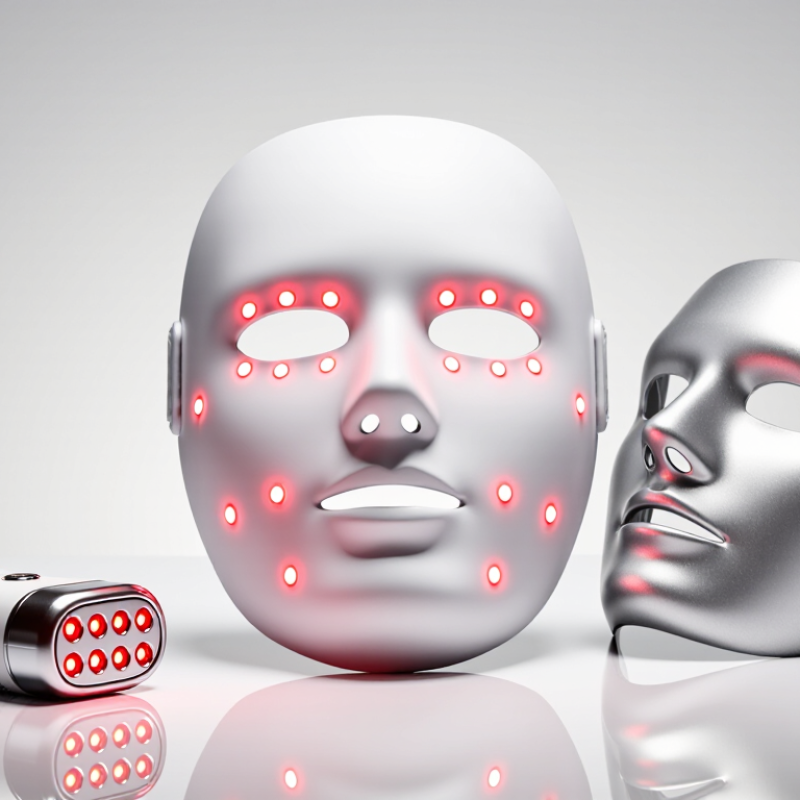
| Flexible facial mask | Often red light in the approximate 630–660 nm range; some models also include near-infrared light around 810–850 nm. | Home users seeking a hands-free facial routine with broad facial coverage. | Convenient to store and use; flexible construction can fit a range of face shapes. | Check fit, coverage, cleaning instructions, timer settings, eye-area guidance, and whether irradiance and treatment time are clearly specified. | Confirm that electrical components and supplied adapters meet the requirements of the destination market. Do not assume that a cosmetic device is authorized to treat a medical condition. |
| Rigid or shell-style facial mask | Commonly uses red LEDs, with some designs adding near-infrared LEDs; exact wavelengths and output vary by model. | Users who prefer a structured mask and repeatable positioning. | Maintains a defined shape and may offer consistent positioning from session to session. | Review weight, ventilation, contact points, fastening method, light distribution, and the manufacturer’s eye-safety instructions. | Packaging and user instructions should be suitable for the language and labeling rules of each sales market. |
| Handheld red-light device | Usually a small red-light treatment area; wavelength and output depend on the device. | Targeted use on smaller facial areas rather than full-face coverage. | Portable and easy to store; allows the user to focus on a limited area. | Check the treatment-area size, required distance, recommended session duration, battery or mains operation, and whether the device must be moved during use. | Travel suitability depends on the power supply, plug compatibility, and voltage range. Follow the supplied instructions rather than substituting an unapproved adapter. |
| Desktop panel with facial positioning | May combine red and near-infrared LEDs; panels can cover a larger area than handheld devices, but output varies substantially. | Users who want a stationary setup for face or face-and-neck use. | Stable placement and larger treatment area; some designs can be adjusted for distance or angle. | Look for measured irradiance at a stated distance, session guidance, panel dimensions, cooling and noise information, and eye-protection instructions. | Consider shipping size, plug and voltage specifications, warranty support, and import requirements for powered equipment. |
| Multi-mode LED facial device | May combine red light with other visible-light colors or near-infrared light. The modes and wavelengths are product-specific. | Buyers who value multiple light settings in one device. | Offers selectable modes, but additional modes do not by themselves establish greater effectiveness. | Check the wavelength and intended use of each mode, how modes are selected, and whether instructions distinguish cosmetic use from medical claims. | Review local rules for advertised claims. Regulatory classification can depend on the intended purpose and claims, not just the light source. |
| Professional-use facial LED system | Configurations vary; some systems provide red and near-infrared light with documented operating parameters. | Clinics or trained practitioners evaluating equipment for supervised settings. | May provide a larger treatment area and more detailed controls or documentation than consumer devices. | Request technical specifications, maintenance requirements, operator training materials, risk information, and evidence supporting the stated intended use. | Check the applicable medical-device or product regulations in every destination market before purchase, import, or clinical use. |