| Single-cylinder deadbolt | Commonly used on exterior entry doors, alongside a separate latch or handle. | Typically requires a key from outside and a thumb turn from inside. A properly installed deadbolt can add resistance to forced entry. | Check that occupants can exit readily from inside without a key. Confirm the door, frame, strike plate, and fasteners are in good condition. | Many standard residential entry doors where local rules and the door configuration permit it. |
| Keyed entry knob or lever | Often used as the primary latch on an exterior door, sometimes paired with a deadbolt. | Provides a keyed exterior lock and an interior release, but generally offers less resistance to forced entry than a separate deadbolt. | Do not assume a keyed knob alone meets local security requirements. Verify that the interior release works as intended and is not obstructed. | Interior or secondary doors, or as part of an approved entry-door hardware arrangement. |
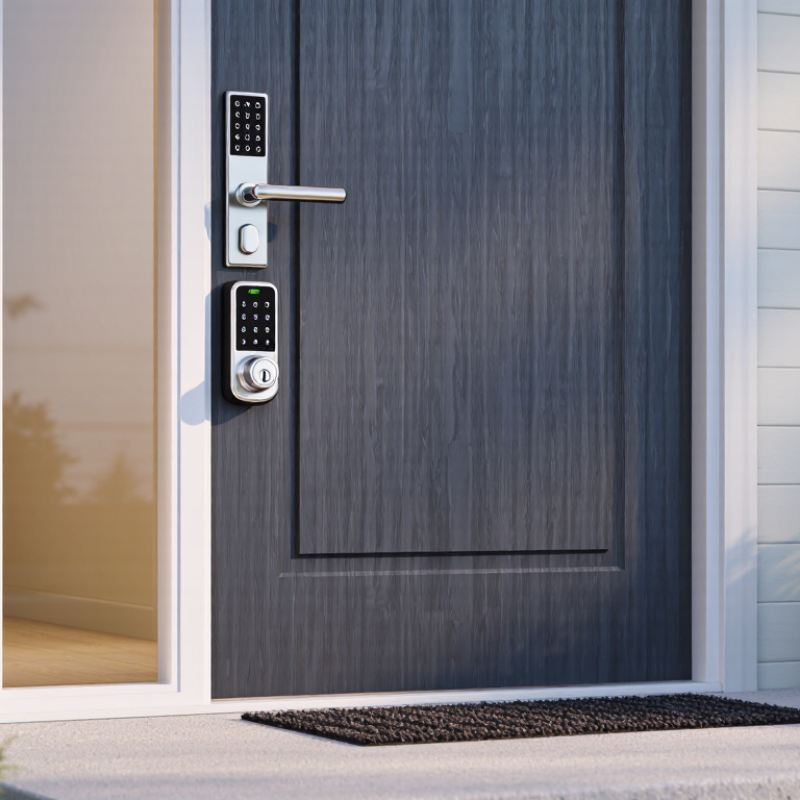
| Keypad electronic deadbolt | Rental entry doors where temporary or individual access codes are useful. | May allow code-based entry and, on some models, a physical key backup. Features vary by model; electronic access does not itself ensure stronger physical security. | Set a process for changing codes between tenancies, managing battery replacement, and providing backup access. Preserve safe, convenient egress from inside. | Short-term or frequently turning-over rentals, when permitted and supported by a reliable access plan. |
| Connected smart deadbolt | Managed rentals where remote code administration or access records are needed. | Depending on the model and setup, may support remote management, scheduled codes, or access notifications. Network and power arrangements affect availability. | Plan for connectivity outages, account security, privacy, battery changes, tenant access, and a manual backup method. Follow applicable privacy and data rules. | Properties with dependable management and a documented digital-access procedure. |
| Mortise lock | Doors designed with a pocket in the edge to hold a mortise lock case; more common in some older or heavier doors. | Can combine latching and locking functions in one assembly. Security depends on the lock, cylinder, door, frame, and installation. | Replacement may require compatible dimensions and professional fitting. Confirm that the inside operation and any required egress function are suitable. | Existing doors built for mortise hardware or projects where compatible hardware is specified. |
| Panic or exit hardware | Certain doors in buildings or occupancies where building and fire codes require specific exit hardware. | Designed to allow opening from the egress side through an intended operating action; permitted configurations depend on the door and applicable code. | Do not substitute ordinary residential hardware without checking the approved door assembly and local requirements. Installation may need qualified review. | Applicable commercial, multifamily, or other regulated exit doors as determined by the authority having jurisdiction. |
| Rim lock or night latch | Surface-mounted supplementary hardware on compatible doors. | May provide an additional locking point, but design and inside-release behavior differ widely. | Check whether it can be opened from inside without a key and whether it interferes with required egress, accessibility, or fire-door operation. | Supplementary security on compatible doors where allowed by applicable codes and lease requirements. |