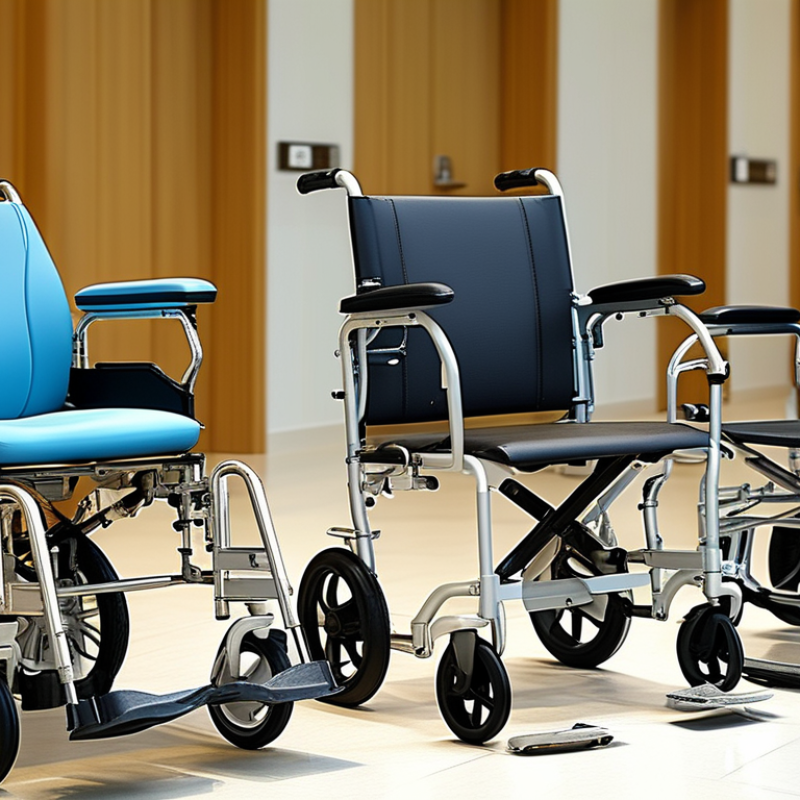
| Standard Manual Wheelchair | General mobility and daily transportation | User-operated hand rims or caregiver push handles | Large rear wheels, folding or rigid frame, footrests, parking brakes, removable or fixed armrests | People who can sit upright and have enough upper-body strength to propel themselves, or have regular caregiver assistance | Self-propulsion requires arm strength and good coordination; seat width, depth, and posture support must be measured correctly | Routine indoor and outdoor use |
| Transport Wheelchair | Short-distance transport and travel | Caregiver-operated push handles | Small rear wheels, lightweight folding frame, swing-away footrests, compact storage design | People who need occasional mobility assistance or cannot self-propel effectively | Not intended for independent propulsion; caregiver must be able to control and lift the chair safely | Medical appointments, shopping, airports, and occasional outings |
| Lightweight or Active-User Manual Wheelchair | Efficient independent mobility and frequent daily use | User-operated hand rims | Low-weight frame, adjustable axle position, compact design, customizable seating, quick-release wheels on some models | Active users with good trunk control and sufficient arm function | A forward or highly adjustable axle can improve maneuverability but may require more balance and handling skill | Independent users who frequently transfer, travel, or self-propel |
| Reclining Wheelchair | Position changes, rest, and pressure management | Usually caregiver-operated; some are self-propelled | Backrest recline, elevating legrests, padded supports, headrest options, pressure-relief positioning | People who cannot maintain an upright posture for long periods or need frequent rest | Reclining changes the user’s body position and requires proper support; it may increase the chair’s length and weight | Users requiring back-angle adjustment or extended seated periods |
| Tilt-in-Space Wheelchair | Postural support and pressure redistribution while preserving the hip-to-back angle | Usually caregiver-operated | Seat and back tilt together, adjustable headrest, lateral supports, pressure-relief positioning, elevating legrests | People with limited trunk control, neurological conditions, or high postural-support needs | Requires professional seating assessment; generally heavier and less convenient for lifting or vehicle storage | Long-duration sitting and complex positioning needs |
| Bariatric Wheelchair | Safe mobility for users requiring a wider seat and higher load capacity | User-operated hand rims or caregiver push handles, depending on design | Reinforced frame, wider seat, stronger upholstery, heavy-duty wheels and brakes | Larger-bodied users who exceed the safe capacity or seating dimensions of standard chairs | Capacity varies by model; verify the user’s weight, seat width, door clearance, turning space, and transport method | Home, clinical, and community mobility where additional width and strength are needed |
| Powered Wheelchair | Independent mobility for users with limited upper-body strength or endurance | Battery-powered motors controlled by a joystick or alternative control | Powered drive, rechargeable batteries, adjustable seating, electromagnetic brakes, optional tilt or recline | People unable to propel a manual wheelchair safely or consistently | Higher purchase and maintenance costs; battery charging, transport access, and control compatibility are important | Frequent indoor and outdoor mobility with reduced physical effort |
| Standing Wheelchair | Assisted transition between sitting and standing | Usually powered, with a standing mechanism | Powered seat elevation or standing function, supportive harnesses, knee and foot supports, programmable controls | Selected users who may benefit from supported standing and have appropriate medical clearance | Not appropriate for everyone; requires clinical assessment, adequate trunk and joint support, and careful training | Supported standing, reaching tasks, and position variation when clinically suitable |