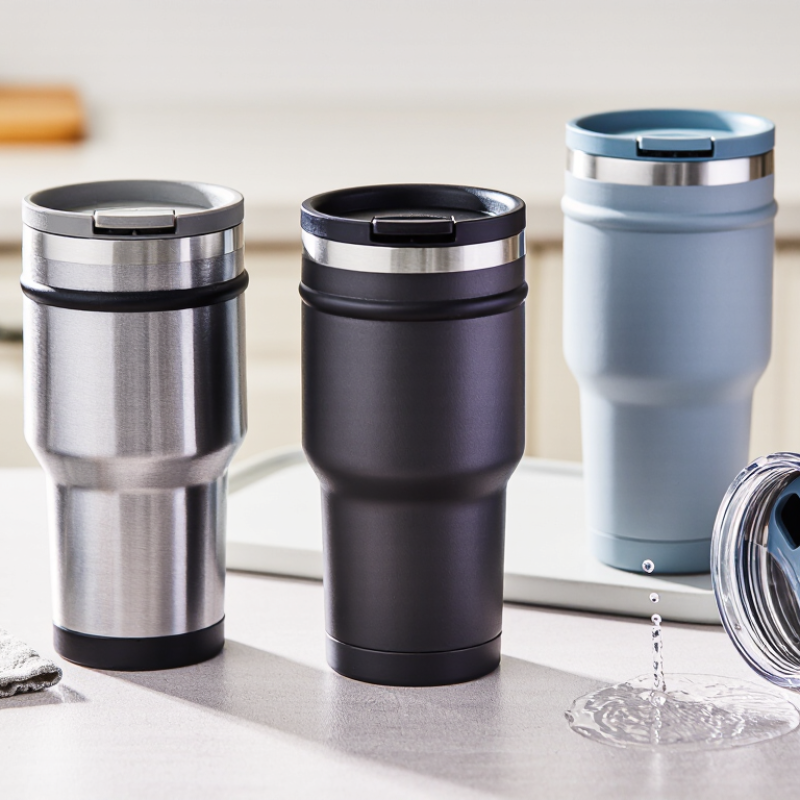
| 1 | Base Diameter and Stability | Specify a 90–95 mm base for common vehicle cup holders, subject to an actual fit check. Keep the base flat and concentric with the body. | Measure the outermost base diameter with a calibrated digital caliper. Test the filled tumbler in the intended cup-holder samples. | Measured diameter is within the agreed tolerance, such as ±1 mm; the tumbler sits fully and remains stable during handling. | A base that is too wide may not fit vehicle holders; a narrow or uneven base can tip easily. |
| 2 | Overall Size and Capacity | Define nominal capacity, such as tumbler sizes of approximately 350–900 mL, together with maximum height and diameter for the target market. | Fill to the manufacturer’s stated capacity using water, then measure volume, height, and widest diameter. | Net capacity meets the purchase order tolerance, commonly ±5%, without overflowing below the lid interface. | Capacity and package dimensions affect shipping cost, user expectations, and compatibility with bags and holders. |
| 3 | Lid Fit and Retention | Use a lid with a continuous sealing interface, secure attachment, and no visible gaps around the drinking opening or edge. | Install and remove the lid repeatedly, inspect the fit, and apply gentle vertical and lateral pull by hand. | The lid remains fully seated, does not detach during normal handling, and shows no cracked tabs, distortion, or sharp edges. | Poor retention can cause spills, customer complaints, and unsafe exposure to hot beverages. |
| 4 | Leak Resistance | Set a documented test for the assembled product; a practical buyer requirement is no visible leakage when inverted and gently shaken. | Fill with water, close all openings, invert for 60 seconds, then shake gently for 30 seconds over dry absorbent paper. | No drops or wet marks from the lid edge, slider, straw port, thread, or gasket area. Record the test temperature and fill level. | Leak performance depends on the lid design and test conditions; it should never be assumed from appearance alone. |
| 5 | Handle Clearance and Strength | Allow comfortable finger clearance, typically at least 25 mm at the narrowest usable opening, while keeping the handle firmly attached. | Measure the opening with a caliper and inspect attachment points. Apply a controlled load agreed in the quality plan, such as 5 kg for 10 seconds. | No cracking, permanent deformation, loosening, or sharp edges after the load test and repeated normal use. | A usable handle improves grip, especially for larger tumblers and hot drinks. |
| 6 | Insulation and Temperature Retention | For double-wall vacuum models, define a time-and-temperature target rather than using a vague “thermal” claim; for example, measure hot and cold retention at 2, 6, and 12 hours. | Use a calibrated thermometer, fixed water volume, controlled starting temperature, and identical room conditions for all samples. | Results meet the agreed specification across samples; reject units with abnormal hot spots, vacuum loss, or exterior condensation beyond the agreed limit. | Actual performance varies with capacity, lid design, fill level, and ambient temperature. |
| 7 | Material and Food-Contact Safety | Request material declarations for every food-contact part. Stainless-steel bodies are commonly specified as 18/8 or 18/10 grades; plastic and silicone parts require separate declarations. | Review supplier declarations and applicable food-contact test reports for the destination market; visually inspect for corrosion, odor, and contamination. | Materials match approved documents, surfaces are smooth and clean, and no unapproved coating or recycled-content claim is used. | Food-contact compliance is market-specific and should be verified against the importing country’s requirements. |
| 8 | Gasket, Thread, and Seal Durability | Use a removable, correctly seated gasket with no flash, tears, or odor. Specify a repeat-use check of at least 100 open-and-close cycles for the lid system. | Inspect the gasket before and after cycling, then repeat the inversion leak test with the same water volume. | No visible damage, loss of elasticity, cross-threading, lid deformation, or leakage after cycling. | Seals often determine real-world leak performance more than the tumbler body itself. |
| 9 | Cleaning and Dishwasher Suitability | Prefer wide openings, removable seals, and accessible drinking channels. Only specify dishwasher suitability when it has been tested for the complete assembled product or clearly defined parts. | Disassemble, wash, and inspect all parts for trapped liquid, staining, odor, warping, coating damage, or loss of seal performance. | All user-accessible areas can be cleaned with the stated care method; parts reassemble correctly after cleaning. | Difficult-to-clean channels and seals can create hygiene issues and shorten product life. |
| 10 | Surface Finish, Marking, and Final Inspection | Specify uniform color or coating, legible capacity and care markings, smooth rims, and consistent appearance across the production lot. | Inspect under bright, even light and compare samples with the approved reference. Check rim smoothness and marking adhesion after cleaning. | No dents, pinholes, exposed metal, peeling print, sharp edges, significant color variation, or workmanship defects visible at normal viewing distance. | Consistent finish supports retail presentation and reduces avoidable returns. |