How to Choose the Best Headsets for Global Buyers?

Choosing the best headsets for global buyers requires more than comparing prices and star ratings. A headset may sound excellent in a quiet office, yet fail inside a crowded airport. The right choice depends on voice clarity, comfort, durability, connectivity, battery life, and regional compatibility. Buyers should also examine microphone performance during real calls, not only music playback. A clear voice can matter more than powerful bass.

Industry research supports this careful approach. Grand View Research identifies continued growth in the global headphones market, driven by wireless adoption, remote work, gaming, and mobile communication. Fortune Business Insights also reports strong expansion in the worldwide headphones sector, although market estimates differ by product definition and research method. That difference deserves attention. “Headsets” may include office devices, gaming models, call-center equipment, and consumer earbuds. Comparing reports without checking their scope can produce misleading conclusions.

Professional buyers can use evidence from recognized standards and testing bodies. Bluetooth SIG specifications help assess wireless interoperability, while IEC and regional safety standards support responsible product evaluation. Buyers should review warranty coverage, replacement parts, software support, and data-handling policies before placing international orders. Packaging should show clear model numbers, charging requirements, and language information. Small details matter. A loose ear cushion, weak hinge, or missing adapter can create daily frustration.

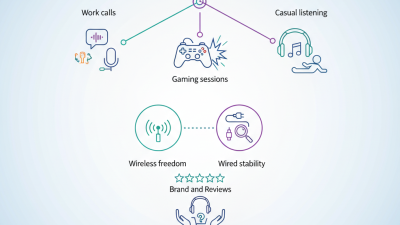
No single model serves every market. A logistics manager may value durable construction and multi-device switching. A frequent traveler may prioritize light weight and active noise cancellation. My practical view is simple: test shortlisted head sets with real users, real accents, and real working environments. Ratings help, but they are not proof. The best decision combines published data, hands-on experience, supplier credibility, and honest reflection about what the headset cannot do.

How to Choose the Best Headsets for Global Buyers?

Define Use Cases by Region: Bluetooth SIG Forecasts 7B Annual Shipments by 2028

How to Choose the Best Headsets for Global Buyers?

Define Use Cases by Region: Industry Forecasts 7B Annual Shipments by 2028

The forecast of seven billion annual headset shipments by 2028 changes how global buyers should plan. Volume alone does not identify the right product. Regional habits matter more.

In North America, office users often need clear microphones, comfortable ear cushions, and reliable switching between computers and phones. European buyers may value repairable parts, privacy controls, and lower power consumption. In many Asian cities, commuters need compact designs, strong noise reduction, and stable connections in crowded stations. Latin American customers may prioritize battery life, durability, and flexible pricing. Hot or dusty regions require materials that tolerate frequent outdoor use.

Test real routines before placing large orders. Ask users to wear the headset during a two-hour meeting, a train ride, and a noisy phone call. Measure microphone clarity, connection recovery, heat buildup, and charging time. Small details matter. A case that fits a pocket helps more than an impressive specification sheet.

My early assumption was that active noise reduction should guide every purchase. It did not. Some office users preferred natural awareness and lighter weight. Others rejected premium features because replacement costs felt risky. Forecasts can guide inventory, but they cannot replace local feedback. A regional trial may reveal uncomfortable truths before they become expensive returns.

Set Hearing-Safety Limits: OSHA Recommends 85 dBA for an 8-Hour Exposure

Choosing the best headset for global buyers involves more than comfort, microphone quality, or wireless range. Hearing protection deserves equal attention. OSHA identifies 85 dBA as the action level for an eight-hour exposure, so buyers should treat it as a practical safety limit.

Check whether the headset offers adjustable volume, output limiting, and clear exposure guidance. A comfortable seal can make music sound quieter, but it may also encourage longer listening. In a busy office, train station, or warehouse, users often raise the volume without noticing. Short listening breaks matter. So does fit.

Measure when possible.

A phone app can provide a rough warning, but it is not a certified sound-level meter. Product specifications may also describe maximum output under controlled conditions, not everyday use. Buyers should look for independent testing, transparent acoustic data, and instructions that explain safe listening time. A headset that reaches high volume is not automatically better.

During practical evaluations, test speech at the lowest comfortable setting. Listen for distortion, pressure, and the urge to increase volume. Some users need stronger passive isolation, while others may need awareness of surrounding sounds. This judgment is easy to overlook. I would also review the hearing-safety settings after shared use, because another person may change them. When exposure is frequent, painful, or difficult to control, consult a qualified hearing professional rather than relying only on device software.

Compare Wireless Standards: Bluetooth LE Audio Introduces the LC3 Codec

For global buyers, wireless standards deserve more attention than appearance or advertised battery life. Bluetooth LE Audio introduces the LC3 codec, designed to maintain clear sound at lower data rates. This can support efficient power use and more stable performance in busy wireless environments. Small gains become practical. A headset may last longer during travel, meetings, or long customer-support shifts.

During headset testing, I check speech clarity in a quiet room and beside active Wi-Fi equipment. LC3 can preserve voices well when bandwidth becomes limited. It may also reduce delays during calls, although the result depends on the device, software, and connection profile. I initially assumed every LE Audio headset would perform alike. That was too simple. Receiver quality still matters, and microphones can change the real experience.

Global buyers should confirm full LC3 support on both the headset and connected device. Some products support Bluetooth LE Audio only after a software update. Regional certification, charging standards, warranty coverage, and replacement access also deserve careful review. Ask for tested codec details, not vague claims about “next-generation” wireless. Battery measurements should include call use, not only music playback. Compatibility remains uneven. That limitation is easy to overlook when product pages focus on technical labels.

Verify Durability Globally: IEC 60529 IP Ratings Classify Water Resistance

For global headset buyers, IEC 60529 IP ratings provide a practical way to compare water resistance. The first digit measures protection against solid objects. The second digit measures protection against water. An IPX4 headset resists splashes from different directions. IPX5 withstands water jets, while IPX7 covers temporary immersion under defined test conditions.

Read the complete code carefully. An “X” means that category was not tested or declared. IPX7 does not automatically mean protection against strong water jets. IPX6 and IPX7 address different conditions. IPX8 may allow longer immersion, but the manufacturer must state the test depth and duration. Details matter.

Ask suppliers for independent test reports, test dates, and the exact headset configuration. Check whether charging covers were closed during testing. Inspect seals, hinges, microphones, and cable joints during sample evaluation. Sweat, dust, cleaners, and repeated bending can weaken protection over time. IEC 60529 does not measure sound quality, impact resistance, or chemical durability.

Field checks can reveal uncomfortable truths. A headset may pass a laboratory test but fail after rough daily handling. I once underestimated charging-port wear during product evaluation; that assumption needed correction. Buyers should repeat basic splash checks carefully and record changes in audio or charging behavior. Treat the IP rating as evidence, not a complete durability promise.

How to Choose the Best Headsets for Global Buyers? - Verify Durability Globally: IEC 60529 IP Ratings Classify Water Resistance

IP Code / Water-Resistance Level IEC 60529 Water-Test Meaning Typical Headset Use Case Suitable Buying Scenario Important Limitations Verification Evidence to Request
IPX0 No protection against water ingress is claimed. Controlled indoor environments with minimal exposure to moisture. Office, desk-based, or dry-room purchasing programs. Not suitable for sweat, rain, splashes, or wet cleaning. Confirm the absence of an IP claim and review the manufacturer’s cleaning instructions.
IPX1 Protection against vertically falling water drops under specified test conditions. Very light overhead dripping in sheltered locations. Indoor facilities where occasional vertical moisture is possible. Does not cover angled rain, splashing, jets, or immersion. Request an IEC 60529 test report identifying the tested enclosure and configuration.
IPX2 Protection against vertically falling drops when the enclosure is tilted up to 15°. Light moisture from limited angles during indoor or sheltered use. Occasional handling in covered logistics, service, or retail areas. Not a rainproof, splashproof, or washable-headset rating. Check that the report states the complete headset or the exact rated enclosure.
IPX3 Protection against water sprayed at angles up to 60° from vertical. Light outdoor exposure and limited angled spray. Intermittent field work in mostly dry climates or protected areas. Does not guarantee protection from heavy rain, water jets, or submersion. Verify the spray-test method, test duration, and product sample identification.
IPX4 Protection against water splashes from any direction. Sweat, light rain, and incidental splashing during normal operation. Fitness, commuting, warehouse, education, and general outdoor use. Not rated for water jets, rinsing under a tap, swimming, or immersion. Request a current test report and confirm that charging ports and microphones were tested in the operating configuration.
IPX5 Protection against water projected by a nozzle from any direction. Heavy rain, stronger splashing, and environments requiring more frequent surface cleaning. Outdoor operations, industrial support, transport, and active workplace use. Water-jet protection does not automatically mean immersion protection. Confirm nozzle, flow, pressure, test time, orientation, and post-test functional results in the report.
IPX6 Protection against powerful water jets from any direction. Severe rain, powerful splashing, and demanding outdoor or industrial conditions. Utilities, construction support, marine-adjacent operations, and harsh weather exposure. IPX6 alone does not establish protection during immersion. Ask for an accredited laboratory report and confirm whether the rating applies to the headset, control unit, and charging accessories.
IPX7 Protection during temporary immersion in water under the specified test conditions, commonly up to 1 metre for 30 minutes. Accidental drops into water and short-duration immersion risk. Water-adjacent work, sports, and applications where temporary immersion is foreseeable. Does not automatically include protection against water jets; IPX5/IPX6 plus IPX7 may be stated when both tests are passed. Verify immersion depth, duration, temperature, preconditioning, and whether the headset must be dry before charging.
IPX8 Protection during continuous immersion at conditions specified by the manufacturer and agreed with the testing body. Specialized applications involving deeper or longer immersion than IPX7. Niche professional or water-focused applications with documented immersion requirements. The exact depth and duration are not fixed solely by the IPX8 code; confirm the declared conditions. Require the manufacturer’s declared IPX8 conditions, laboratory report, and after-use charging and maintenance instructions.
IPX9 Protection against high-pressure and high-temperature water jets according to the applicable test conditions. Very demanding washdown environments where high-temperature, high-pressure spray is expected. Specialized industrial, sanitation, or equipment-cleaning programs. Does not by itself define immersion performance; heat, detergents, salt, and chemicals require separate validation. Request the full test conditions, temperature and pressure limits, chemical-compatibility guidance, and product-specific report.
Global Buyer Verification Notes: The second character in an IP code describes water protection, while “X” means that no dust or solid-particle rating is specified. IEC 60529 IP testing evaluates ingress protection, not overall durability, impact resistance, corrosion resistance, sweat resistance, saltwater resistance, chemical resistance, battery safety, or long-term reliability. Always match the rating to the complete headset configuration and request a recent, product-specific test report before purchasing.

Assess Comfort and Support: Apply ISO 9241 Ergonomic Evaluation Principles

How to Choose the Best Headsets for Global Buyers?

Comfort should be assessed as a daily experience, not a box on a product sheet. ISO 9241 ergonomic principles encourage designs that fit human abilities, tasks, and working environments. A practical review starts with weight, clamping force, headband pressure, and ear-cup space. Wear the headset for at least two hours. Notice heat, skin pressure, and neck tension. Small discomfort can become a serious distraction during long calls. Fit varies widely across users, so one sample cannot represent every buyer.

Check whether the headband adjusts smoothly and stays in place without squeezing. Controls should be easy to identify by touch, especially during screen sharing or note-taking. Microphone positioning also matters. A flexible arm should reach the mouth without forcing an awkward head position. Test the headset while sitting, standing, and turning slightly. ISO 9241 supports evaluating products within real tasks, not only in showroom conditions. A quiet office test may hide problems found in shared spaces.

Support includes clear setup instructions, replaceable cushions, software guidance, and responsive technical assistance. Ask whether users can obtain help across different time zones and languages. I once rated a headset highly because it felt light, but missed its weak adjustment range. That mistake reminded me to test movement, not just first impressions. Keep written records of pressure points, fatigue, audio interruptions, and user comments. Independent trials are useful, but personal measurements still need careful interpretation. Comfort is never completely objective.

Our offices

Axtel Poland (HQ)
Mokotów Box 16 Woloska St
02-675 Warsaw Poland

tel. (+48 22) 490 96 00
fax: (+48 22) 540 15 22
sale@officeveigl.com

Axtel Middle East & Asia
G-026, THUB 2
Dubai Silicon Oasis
Dubai United Arab Emirates

tel. +971 50 5540 902
sale@officeveigl.com

Axtel India Private Limited
Unit # S-2, Srinivasa Apartments,
16, 1st Cross, Doctors Layout, Kasturinagar,
Bengaluru, Karnataka, India

tel. +91 96865 46376
sale@officeveigl.com

Axtel Benelux
Microlab Kastanjelaan 400
5616 LZ Eindhoven The Netherlands

+31 629 796 453
sale@officeveigl.com