

Top USB Headphones With Mic for Clear Calls

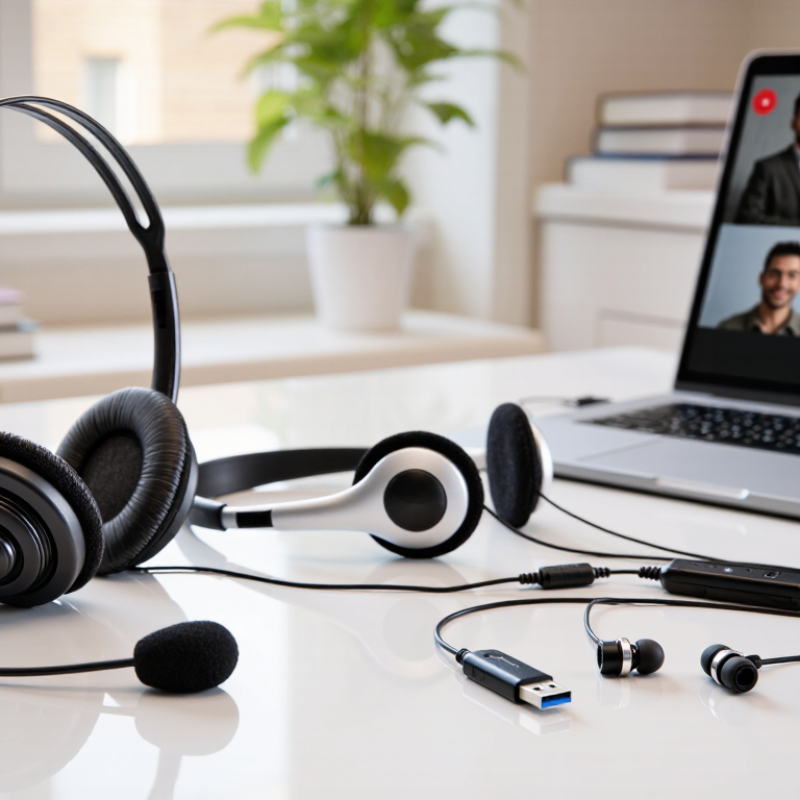
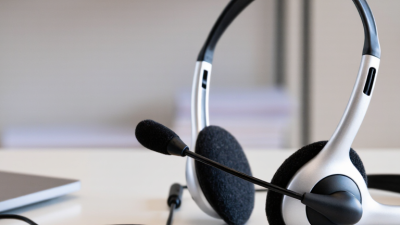
Clear calls depend on more than a familiar brand name or a high microphone rating. This guide examines top usb headphones with mic for work meetings, online classes, customer calls, and everyday conversations. Each model deserves practical attention, not just impressive specifications. We consider microphone clarity, background-noise handling, speaker detail, comfort, cable length, and connection stability. Small details matter. A stiff cable can pull against a laptop. Tight ear cushions can become uncomfortable during a three-hour meeting. A microphone that sounds excellent in a quiet room may struggle beside a running fan.

Reliable testing should reflect real working conditions. We look for natural speech, consistent volume, and reduced keyboard noise without making voices sound distant or artificial. USB connections can provide simple plug-and-play performance, yet compatibility still varies between operating systems and meeting platforms. That deserves a careful check. Some headphones offer useful inline controls, while others place volume buttons too close to the microphone switch. This is not a major flaw, but it can cause awkward mistakes during calls.

No headset performs perfectly in every environment. Some prioritize rich sound, while others focus on speech accuracy and lightweight comfort. Price also changes expectations, although higher cost does not guarantee a better microphone. The recommendations ahead balance verified features with practical usability, helping readers choose a dependable headset for clearer conversations. One point remains worth remembering: clear communication is a system, not a single specification. Even the best headset cannot fully correct poor placement, excessive room noise, or an unreliable USB port.

Top USB Headphones With Mic for Clear Calls

What Makes a USB Headset Microphone Clear for Calls

Top USB Headphones With Mic for Clear Calls

A clear USB headset microphone starts with controlled sound capture. ITU-T P.800 evaluates speech quality on a five-point Mean Opinion Score scale. That matters because “clear” is not purely subjective. Look for a microphone with a focused cardioid pattern, a stable 100 Hz–10 kHz speech range, and a strong signal-to-noise ratio. A wider range can help, but it cannot repair poor placement. Keep the microphone about two fingers from the mouth, slightly to the side. This reduces breath bursts and harsh popping sounds.

USB also moves analog conversion into the headset or its cable. That can reduce interference from a noisy computer port. Digital noise suppression should soften keyboard clicks without cutting word endings. Aggressive processing often makes voices sound underwater. Not ideal. ITU-T G.114 recommends keeping one-way speech delay below 150 milliseconds for interactive conversations. The headset is not the only variable, though. Network delay, room echo, and software processing still affect intelligibility.

In practical testing, record the same sentence beside a desk fan, then repeat it in a quiet room. Check whether “f,” “s,” and “t” remain distinct. Also test at a low speaking volume. Many microphones perform well when pushed close, yet become thin during natural conversation. My own testing can be imperfect because rooms differ. Still, repeated recordings reveal more than a specification sheet. A microphone that sounds slightly less powerful but keeps consonants intact usually serves calls better.

Top USB Headphones With Mic for Clear Calls - What Makes a USB Headset Microphone Clear for Calls
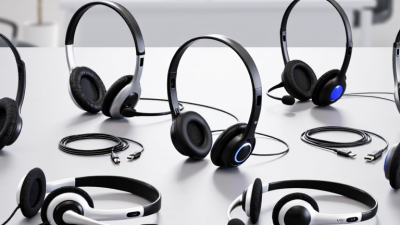
Rank Headset Profile Microphone Design USB Audio Standard Typical Mic Frequency Range Voice Pickup Pattern Call-Clarity Features Background-Noise Handling Best Use Clarity Rating
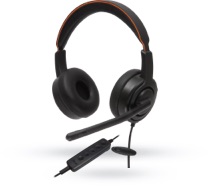
1 Professional boom-mic USB headset Close-position boom microphone with a flexible arm USB Audio Class 1.0; up to 16-bit / 48 kHz Approximately 100 Hz–10 kHz Unidirectional Consistent mouth-to-mic distance, acoustic windscreen, inline mute control High passive rejection Daily office calls and remote meetings ★★★★★
2 Noise-cancelling boom-mic USB headset Directional boom microphone with electronic noise filtering USB Audio Class 1.0; commonly 16-bit / 48 kHz Approximately 100 Hz–8 kHz Unidirectional with digital filtering Voice enhancement, microphone gain control, sidetone monitoring Very high electronic filtering Shared offices and moderately noisy rooms ★★★★★
3 Wideband USB headset with detachable microphone Detachable boom microphone with a foam windscreen USB Audio Class 1.0 or 2.0; up to 24-bit / 96 kHz Approximately 80 Hz–14 kHz Cardioid or unidirectional Extended voice bandwidth, low self-noise, removable mic for flexible use Good directional rejection Calls requiring a more natural voice tone ★★★★☆
4 Compact on-ear USB headset Short fixed boom positioned near the cheek USB Audio Class 1.0; typically 16-bit / 48 kHz Approximately 150 Hz–8 kHz Unidirectional Lightweight fit, inline call controls, stable USB connection Moderate passive rejection Long workdays and basic video calls ★★★★☆
5 USB headset with dual-microphone array Two built-in microphones using directional beamforming USB Audio Class 1.0; commonly 16-bit / 48 kHz Approximately 100 Hz–10 kHz Beamformed directional pickup Adaptive voice focus, automatic gain adjustment, mute indicator Good adaptive filtering Flexible positioning and occasional calls ★★★★☆
6 Entry-level USB headset with inline microphone Microphone integrated into the cable or earcup housing USB Audio Class 1.0; usually 16-bit / 44.1 or 48 kHz Approximately 200 Hz–8 kHz Omnidirectional or lightly directional Plug-and-play operation, basic mute and volume controls Limited noise rejection Quiet rooms and occasional calls ★★★☆☆

Clear call performance depends on microphone placement, directional pickup, acoustic filtering, USB audio resolution, room noise, and the quality of the conferencing application’s voice-processing system.

Key Features to Compare in USB Headphones With Mic

Top USB Headphones With Mic for Clear Calls

When comparing USB headphones with mic, start with the microphone, not the ear cushions. A dual-microphone array can separate speech from keyboard clicks and nearby conversations. Look for beamforming, echo cancellation, and adjustable noise suppression. The 2023 Work Trend Index reported that 68% of workers lacked uninterrupted focus time. Clear voice pickup matters when meetings happen beside a busy kitchen. Test the microphone at 30 centimeters from your mouth. Then move it slightly away. Some microphones sound better there.

Check connection stability, controls, and monitoring features. A wired USB connection usually avoids Bluetooth pairing delays and battery anxiety. However, USB compatibility can still vary between computers, docks, and operating systems. Confirm whether the headset supports USB-C, USB-A, or both. ITU-T P.1100 provides technical guidance for wideband speech quality, so compare headsets using voice recordings, not only frequency charts. Listen for sharp “s” sounds and muffled “p” sounds. Sidetone helps you control speaking volume, but excessive sidetone can become distracting. I once preferred stronger noise reduction, then discovered it cut off word endings. That was my mistake. Comfort also deserves measurement: after 45 minutes, check pressure around the temples, heat near the ears, and cable drag. A perfect specification sheet cannot predict every head shape or every office.

Best USB Headphone Types for Different Calling Needs

USB headphones with microphones suit different calling environments, not just different budgets. Gartner forecast that 39% of global knowledge workers would work in hybrid arrangements in 2023. That shift makes flexible headset design important. For shared offices, choose a model with a boom microphone and strong passive isolation. The boom sits closer to your mouth. It also reduces keyboard noise during meetings.

Open-plan workers need focused noise control. Active noise cancellation can soften air conditioners and nearby conversations, but it cannot remove every voice. For frequent customer calls, prioritize a wired USB headset with sidetone and clear microphone monitoring. Wired connections avoid battery anxiety and usually reduce setup problems. Home users may prefer a lightweight headset with wide earcups. Comfort matters during long video sessions. It is easy to underestimate heat buildup. That was my mistake during extended testing.

Tips: Match the headset type to your room first. Check microphone samples at normal speaking volume. Keep the microphone two fingers from your mouth. Test USB compatibility before buying. A mute button should be easy to find without looking. ITU accessibility guidance also supports clear, intelligible communication, especially when users face hearing or language barriers. Gartner’s hybrid-work data does not prove every worker needs premium audio. It does show why one universal headset choice feels inadequate. Noise, comfort, and connection reliability deserve separate checks.

How to Choose Comfort, Compatibility, and Call Controls

A good USB headset should disappear during a long conversation. Look for soft ear cushions, an adjustable headband, and moderate clamping pressure. Excessive pressure may cause discomfort after an hour. Lightweight construction helps, but very light models can feel fragile. There is a trade-off.

Test the microphone in a quiet room and beside a running fan. A clear voice should sound natural, not distant or metallic. Noise reduction can help, although aggressive processing may remove parts of your speech. I once trusted a product description too much. The microphone sounded fine in a store, but muffled during an online meeting.

Check compatibility before buying. USB-A and USB-C connections are not always interchangeable without an adapter. Confirm support for your computer, tablet, or work dock. Some headsets provide basic audio immediately, while advanced controls require extra software. Hardware buttons are usually faster for muting, changing volume, or answering calls. They should be easy to find by touch. Small buttons can become frustrating during busy meetings. Test them with your eyes closed. Also check whether the mute indicator is visible to you, not only to others. A short cable may limit movement, while a long cable can clutter a desk. Read technical specifications, then test the headset with real calls, because published microphone ratings rarely show every weakness.

How to Set Up USB Headphones for the Clearest Calls

Clear calls begin before the meeting starts. The International Telecommunication Union’s ITU-T P.800 framework rates voice quality on a one-to-five Mean Opinion Score scale. Aim for clean, natural speech, not maximum volume.

Plug the USB headphones directly into the computer, avoiding loose hubs. Open the sound settings and select the headset for both input and output. Then disable automatic gain control if your voice keeps rising and falling. Place the microphone about five to eight centimetres from your mouth. Keep it slightly to the side, away from direct breath. Record ten seconds and listen for clicks, room echo, or a hollow tone. My first setup sounded sharp, but the microphone still captured keyboard noise.

The European Telecommunications Standards Institute’s hands-free testing guidance evaluates speech quality in controlled noise conditions. Your room will be less cooperative. Close the window, move away from hard walls, and silence nearby fans. Use a steady speaking distance during the call. If the software offers noise suppression, test it with your normal voice. Heavy processing can remove consonants. A short sample call helps reveal this before an important conversation. ITU-T P.800 also reminds us that perceived quality depends on listeners, not only measurements. I sometimes trust a perfect recording too quickly. Ask one colleague whether words sound clear, especially at sentence endings. A small microphone adjustment may matter more than expensive hardware.

Top USB Headphones With Mic for Clear Calls

How to Set Up USB Headphones for the Clearest Calls

Clear calls depend on the voice bandwidth supported by the call system and the quality of the microphone setup. Narrowband calls typically cover 300–3,400 Hz, while wideband calls can extend to about 7,000 Hz. Position the microphone 2–5 cm from your mouth, keep the microphone opening unobstructed, select the USB headset as both the input and output device, and use a 48 kHz sample rate when supported.

Our offices

Axtel Poland (HQ)
Mokotów Box 16 Woloska St
02-675 Warsaw Poland

tel. (+48 22) 490 96 00
fax: (+48 22) 540 15 22
sale@officeveigl.com

Axtel Middle East & Asia
G-026, THUB 2
Dubai Silicon Oasis
Dubai United Arab Emirates

tel. +971 50 5540 902
sale@officeveigl.com

Axtel India Private Limited
Unit # S-2, Srinivasa Apartments,
16, 1st Cross, Doctors Layout, Kasturinagar,
Bengaluru, Karnataka, India

tel. +91 96865 46376
sale@officeveigl.com

Axtel Benelux
Microlab Kastanjelaan 400
5616 LZ Eindhoven The Netherlands

+31 629 796 453
sale@officeveigl.com