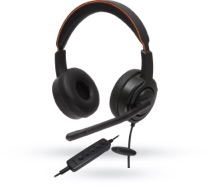
China Top 10 Headphone Manufacturers for Global Buyers?

China remains an important source of headphones for brands, retailers, and audio businesses seeking manufacturing partners. Yet a polished website or low quoted price does not prove a supplier can deliver consistent sound, stable production, or reliable communication. Details matter. Buyers should look beyond product photos and compare each manufacturer’s capabilities against their own needs.

This guide introduces ten Chinese headphone manufacturers for global buyers, with attention to product range, customization, production experience, and export support. The term “head phones” appears in many searches, but buyers should also clarify whether they need wired models, Bluetooth designs, gaming headsets, or noise-cancelling products. Each category brings different requirements for fit, battery performance, microphones, materials, and testing. A useful supplier review checks sample quality, stated production capacity, quality-control processes, and relevant test documentation. Ask specific questions, such as how incoming components are inspected or how defects are recorded. Request current evidence rather than relying only on general claims. Not every supplier fits.

A top-ten list is a starting point, not a guarantee or a universal ranking. Supplier information can change, and product performance should be confirmed through samples and direct discussions. Even an experienced buyer can miss a detail when comparing quotations. Consider total cost, lead times, communication, and after-sales arrangements together. The right partner is the one whose documented capabilities match your product, budget, and delivery expectations.

China Top 10 Headphone Manufacturers for Global Buyers?

How China’s Headphone Manufacturing Industry Is Organized

China’s headphone industry is a network, not a row of identical factories. Component suppliers make drivers, batteries, cables, and molded housings; specialist plants handle acoustic tuning and assembly. Contract manufacturers may build to a buyer’s design, while design-and-manufacturing firms also develop the product and manage sourcing. The boundaries can blur. One site may assemble products and coordinate outside suppliers.

Demand helps explain this structure. Grand View Research valued the global headphones market at about US$34.8 billion in 2023 and forecast 4.5% annual growth from 2024 to 2030. Canalys estimated roughly 257 million global true wireless stereo shipments in 2023. These are market estimates, not Chinese factory output figures. Still, they show why suppliers often serve several product types and production runs.

For buyers, factory selection should match the task. A large assembly line may suit stable, high-volume orders; a smaller engineering-led supplier may be better for acoustic prototypes or frequent design changes. Ask who owns tooling, which tests are performed in-house, and how component substitutions are approved. Look for documented checks on frequency response, battery capacity, and production consistency. Details matter. Supplier directories can be outdated, and factory capability claims need verification. That part is easy to overlook.

Criteria for Evaluating Chinese Headphone Manufacturers

Evaluate a headphone manufacturer by checking what it can prove, not just what its catalog promises. Ask whether its engineers can explain driver selection, enclosure design, and tuning changes for your target use. Request sample units, a current specification sheet, and test results for frequency response, distortion, and channel balance. Details matter. Compare measurements with your own listening tests, since a smooth chart may not match real-world comfort or sound preferences. Confirm whether the factory makes key components itself or relies on outside suppliers.

Review quality controls on the production line. Ask how workers inspect solder joints, ear-cup alignment, cable connections, and packaging, and request recent inspection records. A short video call can show equipment and workflow, but it cannot replace a careful audit. Check how the supplier handles failed samples, design revisions, and production delays. Clear written answers are useful; vague promises are not. Also compare minimum order quantities, sample lead times, payment terms, and communication speed. One awkward point: some details may only become clear after a trial order.

Tips: Send the same test brief to each candidate. Ask for a small pilot batch and inspect units from different cartons. Keep a record of agreed tolerances and revisions. Ask for proof, then verify it.

Profiles of 10 Headphone Manufacturers in China

China’s headphone supply base includes factories with very different strengths. These ten profiles describe common manufacturer types, not a verified ranking. One focuses on over-ear models, with padded headbands and replaceable ear cushions. Another specializes in compact wireless earbuds and charging cases. A third handles wired office headsets, often emphasizing clear microphones and durable cables. A fourth offers noise-reduction designs, while a fifth develops lightweight sports models with secure-fit parts.

A sixth profile centers on gaming headsets, including boom microphones and larger earcups. A seventh serves private-label projects, adapting colors, packaging, and controls to buyer specifications. An eighth concentrates on acoustic components, such as drivers and tuned sound chambers. A ninth supports small production runs and sampling. The tenth combines product assembly with testing and packaging services. Capabilities vary; a polished sample does not prove every production batch will match it.

For a useful comparison, request product specifications, material details, and recent test records. Ask how the supplier checks microphone performance, battery consistency, and hinge strength. A small pilot order can reveal loose buttons, uneven seams, or uncomfortable clamping pressure. These checks are practical, but no checklist catches everything. Confirm production capacity and quality procedures directly, and keep written approval samples for later comparison.

Comparing Product Portfolios, Production Capabilities, and Export Readiness

For global buyers, comparing headphone manufacturers means looking beyond catalog size. Canalys reported that global true wireless stereo shipments reached 289 million units in 2023, up 6% year over year. That demand favors suppliers with clear product tiers, from entry-level wired models to noise-cancelling wireless designs. A useful shortlist should match each model to its target user, component options, and realistic production volume. Broad catalogs can impress, but consistency across versions matters more.

Production claims need evidence. Ask for monthly capacity, recent defect rates, and records of component changes; request figures by product line, not factory-wide averages. Check whether samples and mass-production units use the same battery, drivers, and firmware. Details matter. Export readiness also includes dependable packaging, accurate product specifications, and shipment documents prepared for the buyer’s destination requirements. Request sample cartons and a recent quality-inspection report before approving a large order. A polished sample can still conceal weak hinges or uneven microphone performance. One supplier may look ideal on paper, yet a small pilot order often reveals gaps that a spreadsheet misses.

How Global Buyers Can Verify and Select a Supplier

Choosing among China’s headphone manufacturers requires more than comparing catalog photos and quoted prices. Ask each supplier for its registered business details, factory address, and a named quality-control contact. Check whether production happens in-house or through subcontractors; either arrangement can work, but it should be disclosed clearly. Small details matter. Arrange an independent factory visit or live video tour, and ask to see the production line, incoming component checks, and finished-goods area.

Request samples that match the proposed production model, not just a polished showroom unit. Test fit, button response, microphone clarity, charging, and connection stability in realistic conditions. Record the model number and agreed specifications, then compare them with the final sample. Ask for relevant test reports and confirm that model identifiers match. For battery or wireless claims, verify details with a qualified testing provider.

Before placing an order, put specifications, inspection criteria, delivery dates, packaging, and defect handling in writing. A pre-shipment inspection can check a random set of units against those criteria. Keep the trail. Use traceable payments and confirm the supplier’s legal entity and bank account through independently obtained contact details. A checklist cannot remove every risk; even a good sample may not represent every production batch. Agree on what happens if inspection finds failures.

China Top 10 Headphone Manufacturers for Global Buyers? — How Global Buyers Can Verify and Select a Supplier

Supplier verification scorecard: assess each candidate using the same evidence-based criteria. This is a selection framework, not a ranking of named companies.

Verification Criterion Suggested Weight Evidence to Request How to Verify Potential Warning Signs Score (0–5)
Business identity and operating status 15% Business licence, registered legal name, registered address, and export documentation where applicable. Check the company details against official Chinese business-registration records; confirm that the contracting and payment entities match. Inconsistent company names, unexplained third-party payment accounts, or refusal to provide basic registration details. _____
Manufacturing capability 15% Facility address, production-process overview, equipment list, and recent production-floor evidence. Arrange a live video walkthrough or an independent factory audit; confirm which processes are performed in-house and which are subcontracted. Factory claims cannot be substantiated, footage is not verifiable, or subcontracting is not disclosed. _____
Product compliance and documentation 15% Applicable test reports, declarations, and technical files for the exact model and target market. Check report numbers, issuing laboratory, product model, test scope, and report dates directly with the issuing body where possible. Confirm destination-market requirements independently. Documents cover a different model, contain inconsistent details, or are presented as universal approval for every market. _____
Audio performance and product consistency 12% Production-representative samples, product specifications, and agreed acceptance criteria. Test samples against the written specification; assess sound, microphone performance, fit, controls, and wireless functions under repeatable conditions. Specifications are vague, samples differ from the quoted model, or measurable acceptance criteria are not agreed in writing. _____
Quality management and inspection process 12% Incoming, in-process, and final inspection procedures; defect records; and sample inspection reports. Review inspection records and agree on a pre-shipment inspection plan, defect classifications, and corrective-action process. No traceable quality records, no clear handling of failed inspections, or pressure to ship before agreed checks are complete. _____
Component sourcing and traceability 8% Key-component list, approved alternatives, and material or component traceability records where available. Confirm whether substitutions require buyer approval and verify that critical components match the approved sample and specification. Unapproved component changes, unclear sourcing for critical parts, or inability to identify the production configuration. _____
Production capacity and delivery planning 8% Capacity estimate for the requested model, production lead-time plan, and shipment schedule assumptions. Compare stated capacity with facility evidence and the proposed production plan; clarify peak-season timing and material lead times. Guaranteed delivery dates without a production plan, unexplained capacity claims, or shifting lead times. _____
Commercial terms and order controls 5% Itemized quotation, MOQ, tooling or customization charges, payment milestones, Incoterms, and written specifications. Compare quotations on the same configuration and delivery basis; ensure the contract identifies the product, quality criteria, and remedies for non-conformity. Unclear pricing, material terms omitted from the contract, or requests to pay an unrelated entity without a documented reason. _____
Intellectual property and customization controls 5% Written confirmation of design ownership, tooling ownership, permitted use of artwork, and confidentiality terms where relevant. Document ownership and usage rights in the contract; review proposed designs and packaging for potential third-party rights concerns. Unclear ownership of custom tooling or designs, or claims that another party’s protected branding can be copied. _____
Warranty, spare parts, and after-sales support 5% Written warranty terms, defect-handling procedure, spare-parts availability, and response channels. Agree on warranty scope, claim evidence, response timelines, and responsibility for replacement or repair before placing the order. Warranty exclusions are unclear, support responsibilities are not assigned, or spare-parts commitments are only verbal. _____
Total 100% Suggested method: rate each criterion from 0 (no acceptable evidence) to 5 (strong, independently verifiable evidence), then apply the listed weight. _____

Scoring note: This weighted scorecard is a practical comparison tool, not a certification or guarantee of supplier performance. Confirm legal, technical, and import requirements for the specific product and destination market before ordering.

Our offices

Axtel Poland (HQ)
Mokotów Box 16 Woloska St
02-675 Warsaw Poland

tel. (+48 22) 490 96 00
fax: (+48 22) 540 15 22
sale@officeveigl.com

Axtel Middle East & Asia
G-026, THUB 2
Dubai Silicon Oasis
Dubai United Arab Emirates

tel. +971 50 5540 902
sale@officeveigl.com

Axtel India Private Limited
Unit # S-2, Srinivasa Apartments,
16, 1st Cross, Doctors Layout, Kasturinagar,
Bengaluru, Karnataka, India

tel. +91 96865 46376
sale@officeveigl.com

Axtel Benelux
Microlab Kastanjelaan 400
5616 LZ Eindhoven The Netherlands

+31 629 796 453
sale@officeveigl.com